How Are Subsidies Similar to Tariffs? Trade-Barrier Effects and Key Differences
 Import Export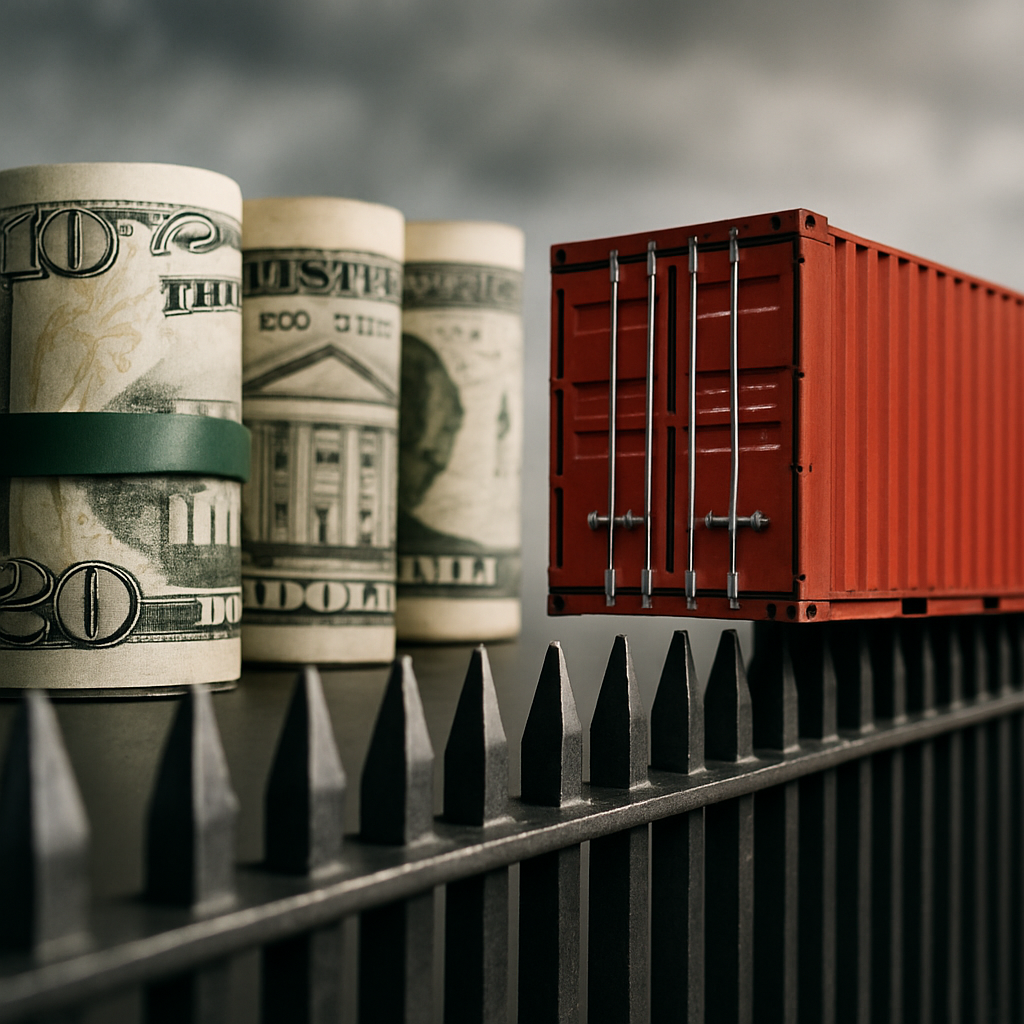
Subsidies and tariffs are similar because both are government trade-policy tools that can protect domestic producers from foreign competition. Each can improve the competitive position of domestic goods relative to imports. The crucial difference is the mechanism: a tariff makes imported goods more expensive by taxing them, while a subsidy gives eligible domestic producers financial support that lowers their costs or otherwise helps them compete.
In other words, tariffs and subsidies can have a similar protective effect, but they are not the same thing and do not place the cost in the same place. A tariff is an import tax. A subsidy is not a tax; it is a government payment, tax benefit, loan concession, procurement arrangement, or another form of support.
How Subsidies and Tariffs Are Similar
Tariffs and subsidies are both broad forms of government intervention in trade. They are often associated with protectionist policy because governments can use them to give domestic industries a stronger position against foreign suppliers.
The shared effect is relative competitiveness:
- A tariff raises the landed cost of an imported product at the border, which can make a domestic alternative comparatively more attractive.
- A producer subsidy reduces an eligible domestic producer's cost of making, financing, selling, or exporting a product, which can improve its ability to compete with imports or in overseas markets.
That is why the concise answer to the question “how are subsidies similar to tariffs?” is that both can help domestic goods compete with foreign goods. They may be intended to support domestic production, employment, or the development of a particular industry, although the results depend on the policy design, the market, and how firms and consumers respond.
It is important not to overstate the classification. Tariffs directly affect trade through a tax on imports. Subsidies need not restrict an import at all; instead, they support a domestic producer. Nevertheless, both are commonly analysed alongside quotas and other trade-policy instruments because they can alter competition between domestic and imported products. A useful overview of these instruments describes tariffs, quotas, and subsidies as the principal tools governments use to intervene in international trade.
Tariffs vs. Subsidies: The Differences That Matter
The following comparison separates the shared goal from the very different routes each policy takes.
| Issue | Tariff | Subsidy |
|---|---|---|
| Basic definition | A tax imposed on imported goods. | Financial support or a financial benefit for eligible producers or industries. |
| Main mechanism | Raises the cost of imports. | Lowers domestic producers' costs or otherwise improves their financial position. |
| Who receives or bears the immediate policy effect? | Importers face the duty liability; the cost may affect buyers and consumers through prices. | The eligible producer, firm, or industry is the direct beneficiary. |
| Public-finance effect | Can generate government revenue. | Requires public spending or, for a tax benefit, reduced tax revenue. |
| Effect on competition | Can give domestic producers an advantage by making foreign goods relatively dearer. | Can give supported domestic producers an advantage by making domestic production less costly. |
A tariff raises the domestic price of an imported product relative to its world price. This may reduce the import's price advantage, but it can also mean higher prices for consumers and businesses that buy the imported item or use it as an input. As explained in this overview of protectionist policies, tariff revenue is collected by the government imposing the tariff, although the economic burden can be reflected in what purchasers pay.
A subsidy works from the domestic producer's side. It can take the form of a direct grant, tax break, reduced-interest loan, export assistance, or government procurement. These forms of support can reduce production or financing costs and improve a firm's ability to compete. A summary of subsidy types and trade barriers distinguishes direct grants from indirect assistance such as tax breaks and concessional loans.
Lower producer costs do not automatically mean lower shop prices. A subsidy may help a firm sell more competitively, but the final consumer-price outcome depends on market conditions, the amount of support, supply conditions, and the firm's pricing decisions. Similarly, neither policy guarantees jobs, output growth, or industry success.
Are subsidies better than tariffs?
Subsidies are not inherently better than tariffs. The appropriate comparison depends on the government's objective, the industry concerned, the likely consumer-price effects, the available public budget, applicable trade rules, and the risk of a dispute or foreign response.
A subsidy may avoid raising import prices through the same direct import-tax mechanism as a tariff. But it has a fiscal cost: taxpayers fund government spending, or the government forgoes revenue through a tax benefit. A tariff can raise revenue, but it can also make imported goods—and sometimes domestic alternatives facing less competition—more expensive. Both policies can distort trade and may lead to trade disputes or retaliatory measures; retaliation is possible, not automatic.
The gains and burdens are therefore distributed unevenly among producers, consumers, taxpayers, workers, importers, exporters, and foreign competitors. For a broader explanation of that distributional issue, see how the gains from trade can be unevenly distributed.
Who Benefits From Subsidies and Why Governments Provide Them
The direct beneficiaries of a producer subsidy are the domestic firms, producers, or industries that meet the programme's eligibility rules and receive the assistance. The assistance may lower their costs, improve access to finance, or strengthen their ability to sell at home or abroad.
Governments may provide financial incentives for several policy objectives, including:
- supporting domestic production or industry development;
- helping firms compete against imports or in export markets;
- encouraging employment or investment in a specified sector or region;
- supporting an activity the government regards as strategically or economically important.
These are policy aims, not assured results. Workers may benefit indirectly if a supported firm expands, while consumers may or may not see lower prices. Taxpayers bear the public-finance cost, and foreign competitors may lose market share. Subsidies can also change market incentives and create trade friction. For example, the trade-policy discussion in this explanation of tariffs and producer subsidies notes the contrast between tariff revenue and the budgetary cost of subsidy support.
Agriculture and renewable energy are frequently used as examples of sectors that can receive government support, but examples alone do not establish which industry receives the greatest support in any particular country or period. Meaningful comparisons require a defined measure, such as direct outlays, tax expenditures, loans, or guarantees.
Where Quotas Fit: Their Purpose and How They Help Domestic Producers
An import quota is a physical or numerical limit on the quantity of a product that may be imported during a defined period. Unlike a tariff, which changes the price faced by an import, a quota directly limits import supply.
The purpose of a quota is often to reduce foreign competitive pressure on domestic producers. If fewer foreign goods can enter the market, domestic firms may have an opportunity to gain market share, increase output, or sell with less competition. These outcomes are possible rather than guaranteed: domestic firms still need the capacity, quality, and pricing needed to serve customers.
Absolute quotas and tariff-rate quotas
- Absolute quota: fixes the maximum quantity permitted for import during the relevant period.
- Tariff-rate quota: permits a stated quantity at a lower tariff rate, then applies a higher tariff to imports above that quantity.
A tariff-rate quota combines quantity management with different tariff rates. As the trade-barrier notes on quotas and tariffs explain, quotas and tariffs have distinct effects: tariffs are taxes and can generate public revenue, whereas a quota caps quantity. Scarcity created by a quota can generate quota rents for whoever holds the right to import, but those rents are not the same as ordinary tariff revenue.
Quotas can reduce consumer choice and may contribute to higher prices when imports become less available. They can therefore protect a domestic industry while imposing costs on consumers or import-dependent businesses. For a practical sector-focused illustration of how tariff effects can reach producers and trading relationships, readers can also see an example of how tariff effects can reach an agricultural sector.
Why Countries Enter Trade Agreements
Countries enter trade agreements to create agreed terms for cross-border commerce and cooperation. At a high level, agreements can make trade between participating countries easier or cheaper by establishing a framework within which governments and businesses operate. Governments negotiate those terms to seek favourable conditions for their own businesses and citizens, while international institutions can provide wider frameworks for cooperation and dispute management.
Trade agreements do not mean that tariffs, subsidies, quotas, or other measures disappear in every circumstance. Instead, they shape the policy environment in which governments use such measures. The terms, coverage, and practical outcomes vary by agreement, so a general explanation should not be treated as an answer key for an unspecified “check all that apply” exercise.
Which Trade Barrier Is Most Directly Used for Political Purposes?
An embargo is a particularly direct trade barrier for political purposes because it involves a complete or partial prohibition of trade with a specified country. It is more severe than an ordinary tariff, which taxes imports, or a quota, which limits their quantity.
Political motivations are not exclusive to embargoes. Governments can also use tariffs and other restrictions in response to perceived unfair trade practices, national-security concerns, or international disputes. However, an embargo is the clearest answer when the question asks for a trade barrier explicitly used to halt or substantially prohibit trade for political reasons. A general guide to trade barriers and embargoes similarly distinguishes embargoes from tariffs, quotas, and other restrictions.
Key Takeaway
Subsidies and tariffs are similar in their potential to protect domestic producers and improve the relative competitive position of domestic goods. They differ fundamentally in method and financing: tariffs tax imports and can raise government revenue, while subsidies support eligible domestic producers and require spending or foregone revenue. Quotas restrict quantities, and embargoes can prohibit trade altogether. Understanding those distinctions helps importers, exporters, and consumers assess who receives the benefit, who bears the cost, and how a trade measure may affect competition.