How Many Cubic Feet Are in a 20-Foot Shipping Container? Standard Capacity and CBM
 Import Export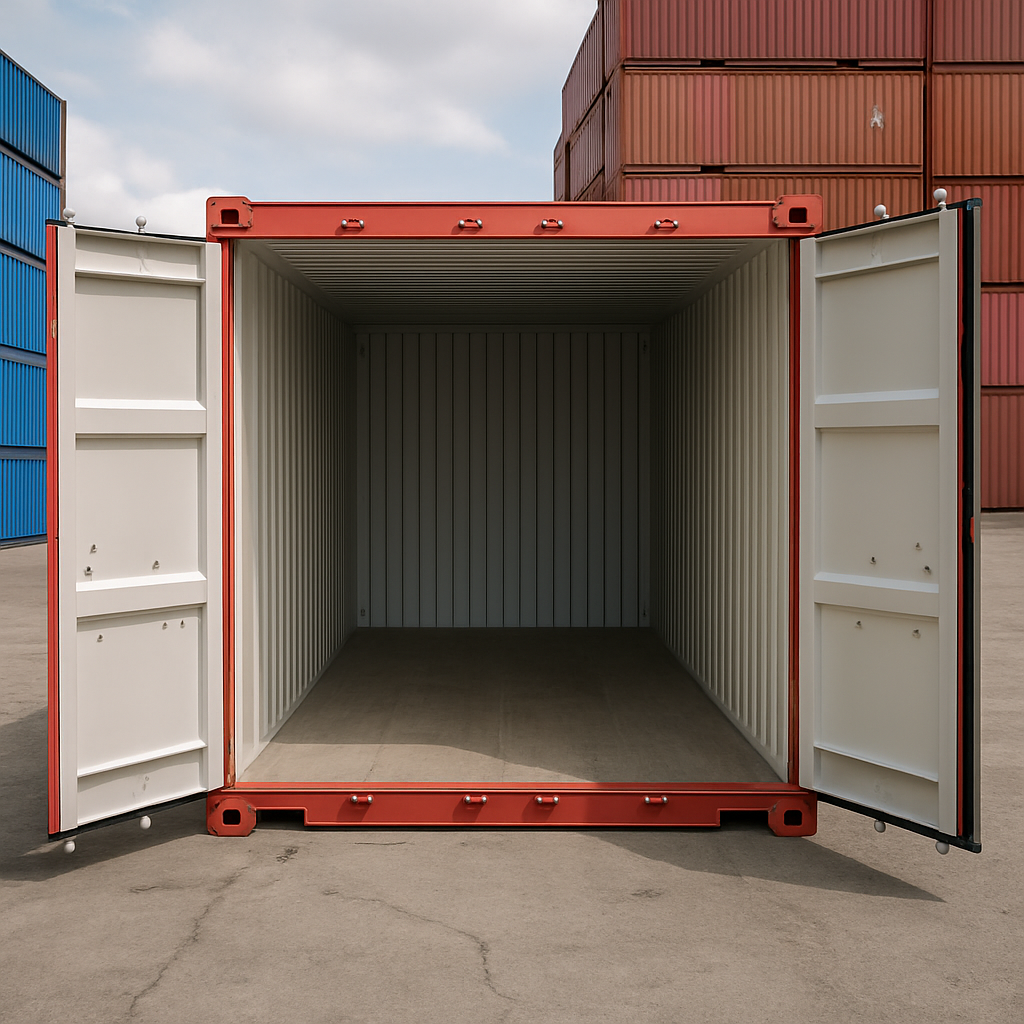
A standard 20-foot dry shipping container has approximately 1,170 to 1,172 cubic feet of usable internal capacity. That is roughly 33 cubic metres (33 CBM). Treat these as planning estimates rather than universal equipment specifications: internal capacity can vary slightly by container design and manufacturer.
This answer refers specifically to a standard 20-foot dry shipping container used for freight, not simply any box that is 20 feet long. For a live shipment, confirm the exact container specification with your carrier, freight forwarder, or equipment provider.
How Many Cubic Feet Does a Standard 20-Foot Shipping Container Hold?
For initial full-container-load (FCL) planning, use about 1,170 to 1,172 ft³, or about 33 m³, as the usable volume of a standard 20-foot dry container. A container-capacity guide describes the typical capacity as about 33 cubic metres, while another supplied reference reports approximately 1,172 cubic feet, or 33.191 cubic metres, for a standard 20-foot container.
| Measure | Approximate standard 20-foot dry-container capacity |
|---|---|
| Usable internal volume | 1,170 to 1,172 cubic feet |
| Usable internal volume | About 33 cubic metres (CBM) |
| Nominal external envelope | Roughly 20 ft long × 8 ft wide × 8 ft 6 in high |
The two volume figures are approximate equivalents, not competing specifications. Minor differences in reported capacity can arise from the particular container design and from rounding between cubic feet and cubic metres.
Why External Dimensions Are Not the Cargo Capacity
A 20-foot container is commonly described by its nominal external dimensions: roughly 20 feet long, 8 feet wide, and 8 feet 6 inches high. Those dimensions identify the outside envelope of the equipment; they are not the same as the space available for cargo inside it.
The container's walls, roof, floor, corner structure, and doors occupy part of that external envelope. That is why the relevant figure for shipment planning is the usable internal volume of about 33 CBM, rather than a calculation based on the external length, width, and height. The supplied capacity information distinguishes external dimensions from usable volume, reporting an internal capacity in the region of 33 to 34 cubic metres.
When preparing a booking, ask for the specification sheet for the actual equipment being supplied. Check it alongside your cargo's dimensions, packing method, and any loading requirements.
What Cubic Feet and CBM Can, and Cannot, Tell You
Cubic feet and CBM measure space. They are useful for estimating whether a shipment may fit within a 20-foot container, but volume alone does not determine whether the cargo can be loaded or legally carried.
Do not use the 1,170-to-1,172-cubic-foot estimate by itself to determine:
- the permitted payload weight;
- the number of pallets, cartons, or other units that will fit;
- the tonnage of a particular commodity;
- whether the cargo can pass through the door opening; or
- whether the load can be packed, secured, and distributed safely.
Actual loadability depends on the cargo's density, packaging, unit dimensions, stacking limits, loading configuration, allowable payload, and the specific container's specifications. A light but bulky shipment may use the container's volume before its weight capacity, while a dense shipment may be limited by weight before it fills the available space.
How to Use a 20-Foot Container Capacity for Shipment Planning
Start by measuring or obtaining the packed dimensions of every shipping unit, then calculate the shipment's total CBM. You can use our guide to calculate your shipment's CBM and volumetric weight before comparing the result with the container's approximate 33-CBM capacity.
That comparison is only the first screening step. Before committing to FCL, confirm the actual internal dimensions, payload limits, door opening, and any packing or cargo-handling constraints with the carrier, forwarder, or container specification sheet. This avoids treating a headline volume figure as a guarantee that a particular load will fit.
When the shipment is well below a container load
If your cargo is substantially below a 20-foot container's usable volume, a shared-container option may be worth comparing with a full-container booking. You can learn when LCL shipping may suit a smaller shipment before deciding which service is appropriate.
Practical Next Step
Use about 1,170 to 1,172 cubic feet, or about 33 CBM, as a sensible starting estimate for a standard 20-foot dry shipping container. Then validate the specific equipment and cargo constraints before booking. Once you have estimated the space requirement, you can also see how the international freight-forwarding process works to move from capacity planning to arranging international transport.