
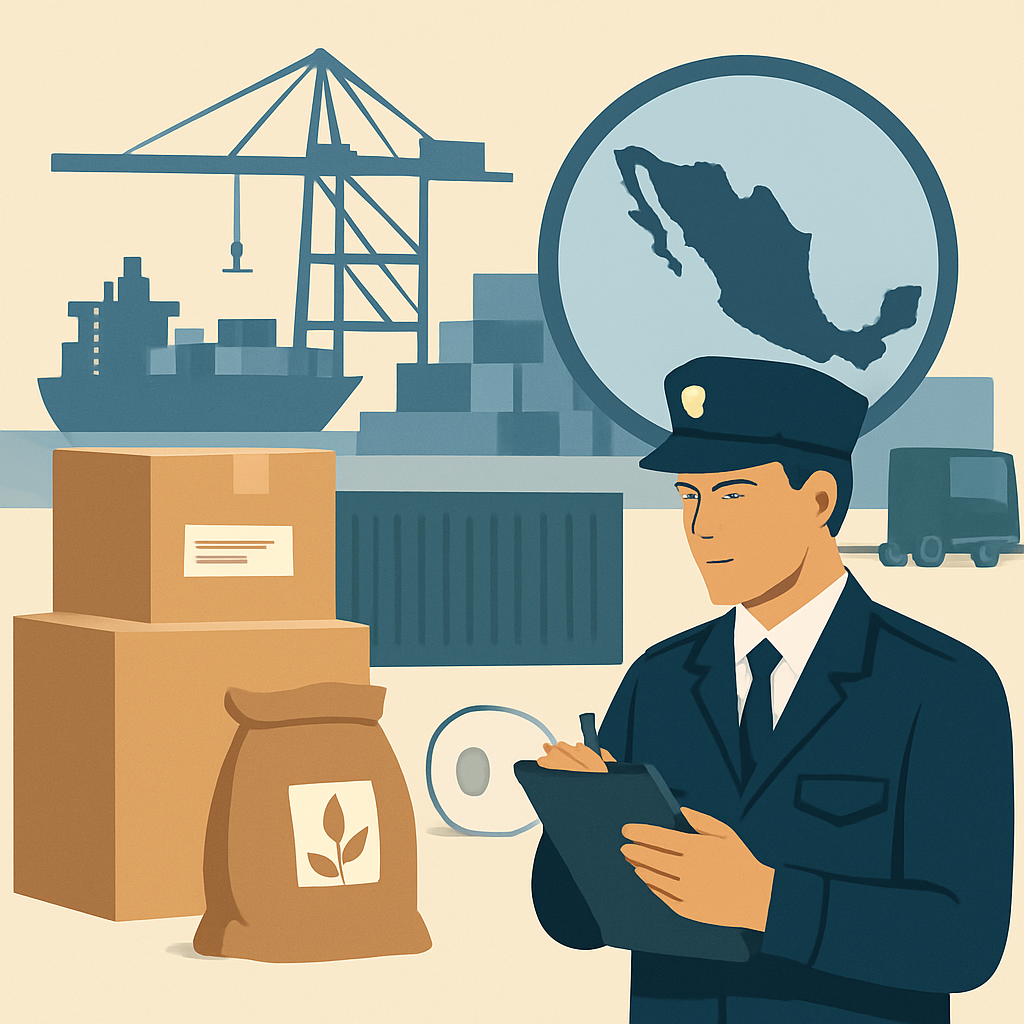
Editorial illustration; not a photograph of the reported event.
Mexico has amended the Regulations of the Customs Law, adding stricter controls on digital traceability, documentation handling, bonded facilities and customs broker obligations in a move that affects importers and exporters across the country. Holland & Knight says the decree was published in the Official Gazette of the Federation on 23 February 2026. It says the changes are intended to support the earlier Customs Law reform published on 19 November 2025 and align with Mexico’s 2026 General Foreign Trade Rules.
The practical consequence for companies moving goods into or out of Mexico is immediate: customs documentation, electronic recordkeeping and warehouse controls may need to be reviewed, particularly where goods move through bonded facilities or strategic bonded facilities. The alert says the new rules apply broadly to importers and exporters operating in Mexico and, more generally, to goods imported into national territory or exported abroad.
What Changed In The Customs Regulations
Holland & Knight describes the amendment as an operational and logistical update to Mexico’s customs framework, rather than a stand-alone tariff measure. The decree introduces or develops rules in several areas, including storage at bonded facilities, digital traceability, customs broker obligations and the technology required for strategic bonded facilities (recintos fiscalizados estratégicos).[1]
One of the clearest shifts is the move towards stronger digital controls. The alert says Mexico has established the mandatory and widespread use of a digital seal or another authorised technological identification mechanism issued by the Tax Administration Service (SAT) for transmitting customs information and documentation. In practical terms, this means customs data and supporting documents must be transmitted in a form that supports traceability and verification, rather than relying on fragmented paper-based processes.[1]
A separate Legal 500 summary of the same 23 February reform says the regulations now require that information sent through the Customs Electronic System match the electronic file and that importers, exporters, customs brokers and customs brokerage firms adopt documented internal control procedures for collecting, integrating, transmitting and retaining foreign trade information.[2]
Bonded Facilities, Hazardous Goods And Storage Rules
The changes are especially relevant for operators using bonded warehouses and related regimes. Holland & Knight says there are new obligations tied to the operation and administration of bonded facilities, including modifications to customs clearance processes, the storage period for goods and the way goods are withdrawn from storage.[1]
It also flags a more specific rule for flammable, corrosive or polluting goods. Under the updated framework, goods of that kind destined for the depósito fiscal regime may remain in storage only if the facility holds the appropriate certification. The alert does not provide a full list of covered products, but says the rule could affect supply chains for items such as solvents, adhesives, corrosion inhibitors, battery chemical precursors and industrial gases.[1]
For companies that use bonded storage to manage inventory timing or defer customs clearance, the main trade consequence is that facility compliance now matters more directly. If warehouse certification or monitoring systems are not in place, shipments may face disruption even before other customs questions are resolved.
Customs Broker Obligations Are Being Expanded
The decree also gives more detail to the obligations of customs brokers and customs agencies. Holland & Knight says the amendments further develop the obligations arising from the earlier Customs Law reform and the 2026 foreign trade rules.[1]
That matters because customs brokers are intermediaries in the customs process, not the importer of record unless a separate legal structure makes them one. The supplied evidence does not say that brokers take over the importer’s legal status. Instead, it shows that their compliance duties are being sharpened alongside the importer’s own responsibilities. Businesses should therefore avoid assuming that using a customs agent shifts the underlying compliance burden away from the importer.[1]
The Legal 500 report adds that the amendments strengthen responsibility and traceability across foreign trade participants and require documented internal controls over information collection, transmission and retention.[2] For traders, this means contract reviews may be needed not only with brokers but also with logistics providers, warehouse operators and internal compliance teams.
Technology Systems Now Sit At The Centre Of Compliance
Another practical shift concerns strategic bonded facilities. According to Holland & Knight, the authorisation and operation of these facilities now depend on a technology platform that integrates electronic inventory control systems, video surveillance, security, traceability and real-time monitoring of goods entering, remaining in and leaving the site.[1]
That requirement is significant because it turns technology from a back-office support function into a core compliance issue. Operators that rely on older inventory systems, incomplete CCTV coverage or manual reconciliation may need to upgrade if they want to continue using these regimes without interruption.
What Companies Should Check Now
Based on the published alerts, the most useful next steps are operational rather than speculative:
- review whether customs documentation matches the new traceability expectations;
- check that electronic files, transmitted data and supporting records are aligned;
- confirm that bonded facilities used in the supply chain hold the necessary certifications, especially for hazardous goods;
- assess whether technology systems can support SAT-linked digital identification and real-time monitoring; and
- revisit broker and logistics contracts to reflect the expanded compliance role described in the amendments.
What remains unclear from the supplied primary evidence is the scale of any enforcement change and the precise penalty structure. Those points are not set out in the Holland & Knight alert, so they should not be assumed.
For companies trading with Mexico, the immediate message is straightforward: customs compliance is becoming more digital, more document-intensive and more dependent on auditable systems. Firms handling regulated, hazardous or high-volume cargo are likely to feel the pressure first.
Related Reading
For broader background on customs compliance, see our coverage of customs clearance requirements in 2026.