Canadian Counter-Tariffs on U.S. Semi-Trailers: Rates, Coverage and Importer Impact
 Import Export
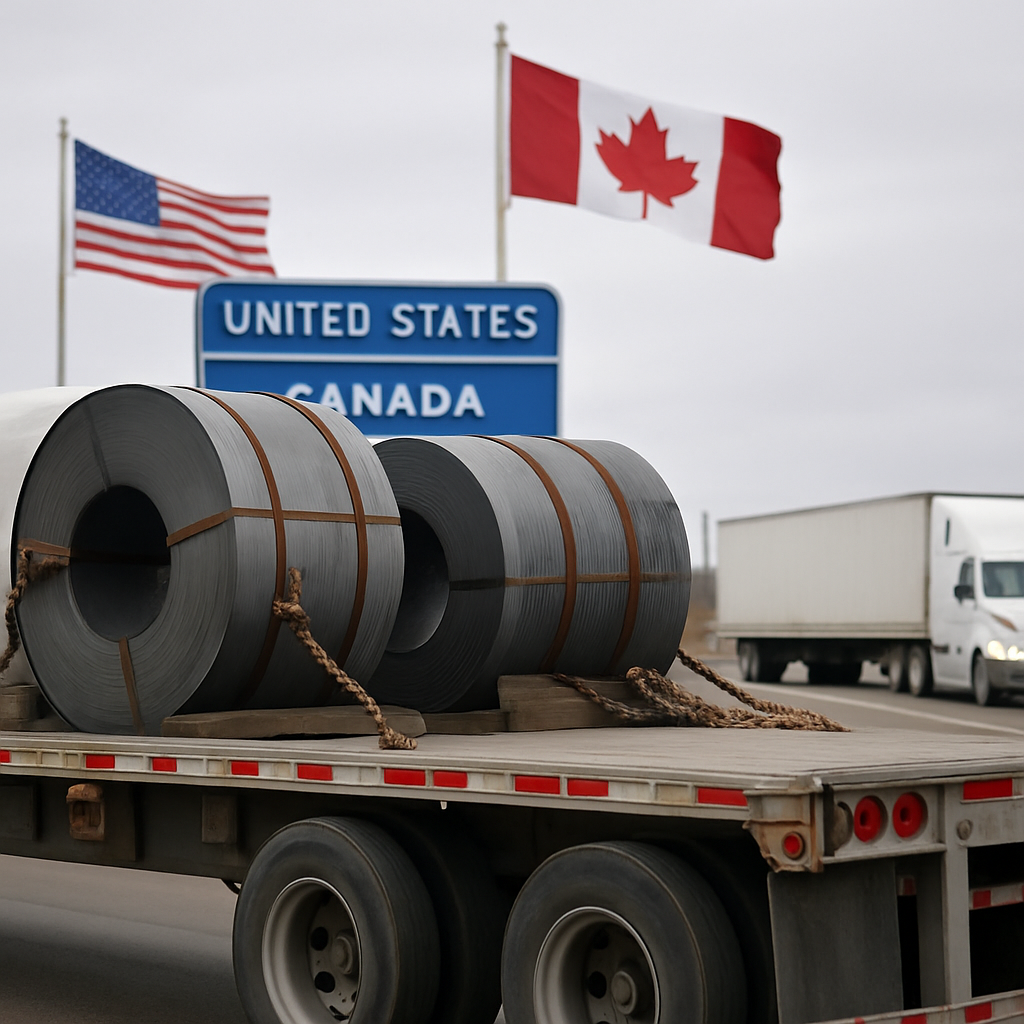
Canadian counter-tariff treatment for a semi-trailer is not determined simply by where it was bought or collected. Before ordering, shipping or declaring a trailer from the United States, an importer should confirm the trailer’s customs classification, country of origin, whether its tariff line appears in the current Canadian countermeasure schedule, the rate assigned to that line, and whether any current exclusion, remission or other relief applies.
Where a trailer is covered, the counter-tariff can increase its landed cost and affect fleet replacement, dealer contracts and sourcing decisions. It does not follow that every trailer sold by a U.S. dealer is subject to the same rate. Start by checking the current information published by the Canada Border Services Agency (CBSA) and the Government of Canada’s complete list of U.S. products subject to counter-tariffs. For an actual import entry, ask a qualified customs broker or trade adviser to confirm the treatment for the specific equipment and transaction.
Are Canadian counter-tariffs on U.S. semi-trailers currently in effect?
According to the CBSA’s published tariff information, Canada imposed counter-tariffs of 15%, 25% or 50% on certain goods originating in the United States as of 8 September 2026. Whether a particular semi-trailer is included, and which rate applies, must be checked against the current official schedule. Measures, covered tariff lines, rates and relief provisions can change.
That distinction matters for fleet buyers. A headline rate is not a classification decision, and a trailer’s product description on a dealer listing is not sufficient evidence of its customs treatment. Use the CBSA tariff page for current application information before relying on this article or on a supplier’s informal estimate.
How to tell whether a specific semi-trailer is covered
Canadian counter-tariffs apply by reference to goods and tariff lines in the applicable measure. The practical question is therefore not only, “Is this a semi-trailer?” but also, “How will this exact trailer be classified and what is its origin under the current rules?”
Use the following workflow before committing to a purchase:
- Describe the equipment precisely. Record the trailer configuration, intended use, specifications, model, new or used condition, and the description that will appear on the commercial invoice.
- Establish the country of origin. Obtain manufacturing and origin information from the dealer or manufacturer. Do not assume the origin solely from the seller’s location, collection point or shipping route.
- Determine or validate the tariff classification. A customs broker or qualified adviser can help assess the proposed classification using the trailer’s complete specifications and supporting documents.
- Check the current countermeasure list. Compare the confirmed tariff line and origin with the Government of Canada’s complete product list and the current CBSA guidance.
- Confirm the listed rate and any available relief. Check whether the current measure identifies a rate for that line and whether an exclusion, remission or other relief may be relevant. Do not presume one exists.
- Obtain transaction-specific confirmation before import. Give your broker or adviser the invoice, specifications, origin information and proposed classification before the trailer is shipped or presented at the border.
| Question to answer | Why it matters | Where to verify |
|---|---|---|
| What exactly is being imported? | Tariff treatment depends on the equipment’s classification, not a broad marketing label. | Trailer specifications, invoice and broker review |
| Where does the trailer originate? | Countermeasures described by CBSA apply to certain goods originating in the United States. | Manufacturer and supplier origin documentation |
| Is the tariff line covered and at what rate? | Rates and coverage are determined line by line under the current measure. | Government of Canada product list and CBSA guidance |
| Is any relief available? | Exclusions and other relief, where available, are fact- and measure-specific. | Current official notices and professional advice |
Country of origin is not the same as country of purchase
You can buy a trailer in the United States and bring it to Canada, subject to the applicable Canadian import requirements. However, buying it from a U.S. dealer, paying in U.S. dollars, picking it up in the United States or having it shipped from a U.S. location does not by itself settle its counter-tariff treatment.
A trailer sold in the United States may have a different country of origin; equally, a U.S.-origin trailer may be sold through another channel. Customs origin, tariff classification and the current Canadian countermeasure list are the relevant questions. Keep the supplier’s manufacturing and origin documentation, the full equipment specification and the commercial invoice, and seek transaction-specific advice before assuming that a purchase is or is not covered.
Counter-tariffs, tariff lines and CUSMA: plain-language terms
A counter-tariff is a Canadian tariff measure applied in response to another country’s trade measures. A tariff line is the product classification reference used in a customs schedule. Customs classification is the process of determining the tariff line that applies to an imported good. Country of origin is a customs concept and is not necessarily the same as the country of purchase, shipment or seller.
Preferential treatment under CUSMA and exposure to a separate counter-tariff are distinct questions. Do not assume that an assertion of CUSMA eligibility answers the counter-tariff question. Confirm the treatment under the current Canadian measure for the specific trailer.
What to check before you buy a U.S. trailer
- Ask the dealer or manufacturer for a detailed specification sheet, model information, commercial description and origin/manufacturing documentation.
- Ask who will act as importer of record and who is responsible under the purchase contract for duties, counter-tariffs, brokerage, taxes and changes in tariff treatment.
- Provide the proposed invoice value, specifications, origin documents and planned shipment details to a customs broker for a landed-cost estimate.
- Check the current official product list rather than relying on a past quotation, online discussion or a generic description such as “U.S. trailer”.
- Review delivery dates and border arrangements early enough to resolve classification or documentation questions before shipment.
- Compare Canadian, non-U.S., used and rental alternatives only after confirming the equipment requirements, lead times and true landed costs of each option.
These checks are especially useful where a fleet is replacing several units, acquiring specialist equipment or working to fixed customer contracts. The cost of correcting a mistaken tariff assumption after equipment has shipped can be much higher than obtaining an informed pre-purchase review.
How counter-tariffs affect the landed cost of a semi-trailer
A percentage quoted in a news report is not the final cost of importing a trailer. In plain language, a landed-cost review normally starts with the customs value used for import purposes, then considers any applicable ordinary customs duty and counter-tariff, as well as applicable taxes, transport, brokerage and compliance costs.
A useful planning framework is:
Customs value + applicable customs duty/counter-tariff + applicable taxes and other import charges + transport and brokerage costs = estimated landed cost
The customs value, applicable rate and tax treatment depend on the import declaration and current rules. This framework is not a self-assessment or a final quote. Use it to ask a broker for a complete estimate and to compare procurement options on a like-for-like basis.
For a trucking business, the commercial effect may be an increase in the acquisition cost of a covered trailer, a need to revisit replacement timing, or a change in whether purchase, lease, rental or used equipment best fits the fleet plan. The scale of the effect depends on the particular trailer’s coverage, the purchase price, financing and contract terms, available substitutes, and the business’s replacement cycle. Tariffs do not automatically produce the same price or availability outcome across every trailer type or operator.
Why Canada imposed counter-tariffs
Canada’s countermeasures form part of a broader Canada-U.S. tariff dispute. The policy context helps explain why rates may apply across a range of U.S.-origin products, including industrial goods, rather than solely to goods that are themselves steel products. It does not mean that every trailer is treated as steel or that steel input costs determine the customs treatment of a trailer.
The current framework described in official search results includes rates of 15%, 25% and 50% on certain U.S.-origin goods. The rate for an actual import remains a tariff-line question. For additional business and legal context on the broader counter-tariff programme, see this overview of Canadian counter-tariffs, risks and opportunities for businesses and the Financial Post’s discussion of the evolving trade conflict.
Official resources to monitor before importing
Because this is a time-sensitive regulatory issue, use official Canadian resources as the starting point for every planned import:
- CBSA: Canadian tariffs on certain U.S. goods — current application information and customs-facing guidance.
- Government of Canada: complete list of U.S. products subject to counter-tariffs — product coverage to check against the applicable tariff line.
- Trade Commissioner Service: resources for businesses facing U.S. tariff challenges — broader support and tariff-related business resources.
Check the publication or update date on each official page. A broker, customs specialist or trade adviser can help apply the current material to the documents and facts of an individual trailer import; this article cannot provide a classification ruling or legal advice.
How trucking companies and fleet operators can respond
Counter-tariffs can affect trucking businesses most directly when they are purchasing covered equipment. They may also influence dealer discussions, capital budgets and customer contracts. A practical response is to make tariff verification part of the normal procurement process rather than treating it as a last-minute border issue.
Before signing a purchase agreement
- Map planned trailer purchases, replacement dates and delivery windows.
- Request origin and specification documents before agreeing to buy.
- Review purchase-order, lease and Incoterm language to identify who bears duties, counter-tariffs and tariff changes.
- Obtain a conservative landed-cost scenario for any trailer that may be covered.
- Assess alternatives such as Canadian sourcing, non-U.S. sourcing, used equipment or rentals on their own commercial merits.
Before shipping or collecting the trailer
- Reconfirm the classification, origin and current schedule coverage with the documents that will accompany the import.
- Make sure the commercial invoice accurately describes the equipment and matches the supporting records.
- Ask your broker whether any further information is needed before the declaration is made.
- Recheck official updates if there has been a material delay between the quotation, purchase and shipment dates.
At import
- Ensure the importer of record and broker have the correct invoice, origin information and equipment specifications.
- Retain the documents used to support classification, origin and valuation decisions.
- Review the entry and assessed charges promptly, and seek professional advice if the treatment differs from the pre-import estimate.
Diversifying suppliers, building longer purchasing lead times, working with Canadian manufacturers, considering used units and using rental equipment can all be options worth evaluating. They are not universal solutions: suitability depends on the trailer specification, operational requirements, availability, financing and the result of the customs review.
Potential supply-chain and business effects
Semi-trailers are essential equipment for transportation, manufacturing, agriculture, food distribution and other businesses moving goods within Canada and across the border. If a planned purchase is covered by a counter-tariff, the immediate issue is a potentially higher landed cost for that capital equipment. Businesses may need to revisit fleet budgets, replacement schedules and the price assumptions used in customer contracts.
Broader effects are possible but are not automatic. They can vary with the type of trailer, supplier capacity, purchasing cycles, financing arrangements, contract terms and the availability of alternatives. Businesses should avoid assuming either that domestic supply will immediately replace imported equipment or that tariffs will necessarily create a specific shortage. The more reliable approach is to validate coverage and cost for the equipment actually being purchased.
For reporting on the pressure that trailer costs can create for trucking businesses, see this CBC News report on semi-trailer costs and downstream effects. It is useful context, but official schedules and customs advice should remain the basis for an import decision.