What Made the Freightliner Boeing Turbine Truck of the 1960s a Revolution in Specs and Parts?
 Import Export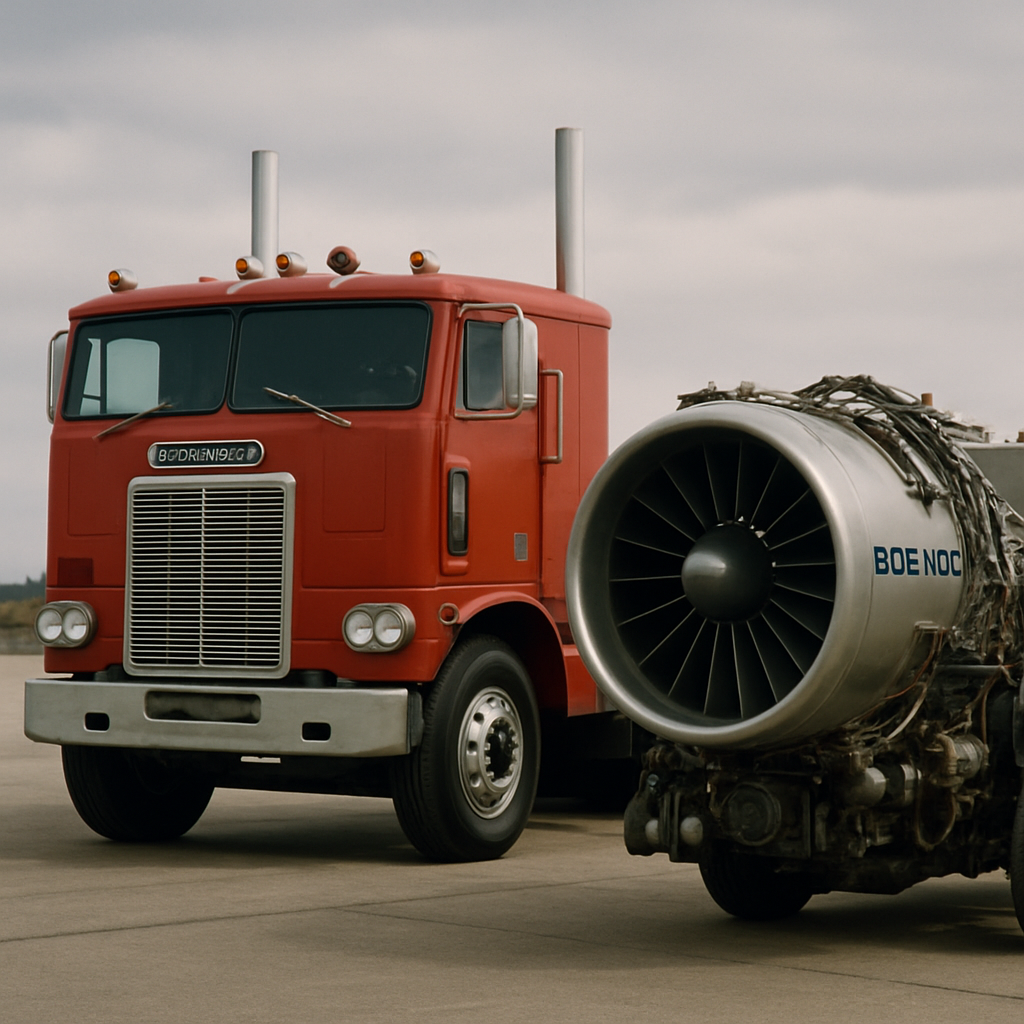
The Freightliner Boeing turbine truck of the 1960s was an ambitious project that merged aviation innovation with heavy-duty trucking. This experimental vehicle captivated the industry by integrating jet engine technology into a road hauler, promising higher power and futuristic design. It stood apart due to its unique engineering, specialized parts, and headline-grabbing performance specifications—qualities that still inspire truck enthusiasts and engineers today.
What Were the Unique Specs of the Freightliner Boeing Turbine Truck in the 1960s?
The Freightliner Boeing turbine truck boasted specifications unheard of in the conventional diesel trucks of its day. Powered by a Boeing-developed gas turbine engine, it offered smoother acceleration and a lighter powertrain compared to traditional setups. Most notably, the truck was designed to showcase how turbine power, proven in aviation, could transfer to hauling massive loads on highways.
The heart of the truck was its compact Boeing 502-8A gas turbine engine—originally developed for aircraft auxiliary power units—capable of producing more than 300 horsepower. This engine weighed significantly less than standard diesels but ran at far higher RPMs, resulting in unique drivetrain challenges. Nevertheless, its high power-to-weight ratio placed it years ahead of most terrestrial competitors.
In addition to its turbine engine, the truck featured radical styling facilitated by the engine's small size. Engineers were able to reconfigure cab layouts and even add aerodynamic fairings to test new concepts. Despite not reaching production, the project offered vital data for future gas turbine vehicles and influenced later commercial engine upgrades, as discussed in commercial fleet propulsion advancements.
How Did Turbine Power Affect Truck Parts and Maintenance?
Integrating a jet turbine into a road-going truck created entirely new challenges for parts, maintenance, and reliability. Unlike diesel engines, gas turbines use far fewer moving parts—there are no pistons, connecting rods, or complex valve trains. Instead, hot-section components like turbine blades and specialized bearings took center stage, requiring new approaches to service and replacement.
Common parts subject to wear included high-precision turbine wheels, heat-resistant injector nozzles, and special reduction gears to convert the turbine's high-speed output to usable torque. These bespoke components were not available at standard truck supply outlets, necessitating custom support from both Boeing and specialist contractors.
Despite reduced scheduled maintenance due to fewer moving parts, the unique stresses of land-based operation led to new reliability benchmarks for high-power rotary systems. Innovations in validation and reliability testing for turbines derived lessons from these experiments that echo in today's power generation and transportation sectors.
The short production run prevented a widespread aftermarket for these parts, but their legacy can be seen in the more robust and efficient fleet engines available today as a result of rigorous testing frameworks.
How Did the 1960s Turbine Truck Compare to Paccar and Other Major Brands?
During the 1960s, Freightliner’s turbine project directly competed with diesel powerhouses like Kenworth and Peterbilt, both part of the Paccar family. These brands focused on refining tried-and-true diesel technology, making incremental improvements in power, emissions, and longevity. The Freightliner Boeing turbine truck took a radically different path, trading conventional wisdom for experimental engineering.
Compared to its diesel contemporaries, the turbine truck offered unmatched smoothness and theoretical fuel flexibility while operating at much higher temperatures and RPMs. However, diesel engines from Paccar brands were more mature, robust, and supported by an extensive parts and service network, factors that ultimately led fleets to favor traditional powerplants.
The turbine’s technical complexity and need for specialized repairs limited its commercial viability. Nonetheless, the project raised the bar for innovation and encouraged competitors to experiment with alternative propulsion, paving the way for developments in engine design and emissions technology seen in later models such as those from Paccar and other major truck OEMs.
Were There Any Legal or Corporate Controversies Related to the Boeing Turbine Projects?
No widespread class action lawsuits or high-profile corporate disputes were reported specifically regarding the Freightliner Boeing turbine truck project. However, the merging of aerospace and automotive technologies brought about significant regulatory scrutiny and internal debates over safety, cost, and market readiness. Boeing’s involvement was more exploratory than commercial, limiting public exposure to liability or litigation.
Boeing has faced class action lawsuits in other industry areas (notably aviation-related incidents), but such legal matters did not overlap with the turbine truck initiative. Instead, most challenges were internal, focusing on risk assessment and engineering feasibility—issues also encountered in other turbine markets explored in competitive gas turbine supply and manufacturing.
How Powerful Were the Boeing Turbines Inside Freightliner Rigs?
The Boeing 502 and 553 gas turbine engines used in experimental 1950s and 1960s Freightliners produced between 300 and 400 horsepower while weighing under 400 pounds. This delivered an astonishing power-to-weight ratio compared to contemporary diesel engines that produced equivalent output at over 2,000 pounds.
When Consolidated Freightways and Freightliner partnered with Boeing to test gas turbine propulsion in heavy trucks, the primary goal was drastic weight reduction. Conventional 1960s diesel engines were massive iron behemoths. By dropping in a Boeing 502-10C turboshaft engine, engineers cut over 1,500 pounds off the front axle. That weight savings translated directly into extra payload capacity for haulers. According to historic overviews of Freightliner's tradition of innovation, these experimental Turboliners proved that alternative powerplants could haul heavy freight across mountain passes without stalling. However, poor fuel economy at idle speed ultimately prevented mass commercial adoption.
Which Heavy Commercial Vehicle Brand Performs Best: Freightliner, Peterbilt, or Kenworth?
Freightliner leads the North American market in fuel efficiency, fleet integration, and total sales volume, whereas Peterbilt and Kenworth excel in custom owner-operator craftsmanship and extreme heavy-haul durability. The ideal choice depends entirely on whether a buyer prioritizes low operational overhead or long-term resale value.
Fleet managers lean toward Freightliner because cheap replacement components and widespread service centers lower cost per mile. Peterbilt and Kenworth—both subsidiaries of PACCAR—build premium aluminum-cab trucks with legendary build quality. If you drive long-haul cross-country routes solo, a Kenworth W900 or Peterbilt 389 offers superior cab isolation and classic styling. Freightliner Cascadia models dominate highway freight by shaving every fraction of a percent off fuel consumption through aerodynamic testing. Legendary turbine experiments like the Freightliner Turboliner development program highlighted early efforts to out-engineer traditional Class 8 competitors through radical weight-saving designs.
What Older Freightliner Models Last Longest on the Highway?
Pre-2007 Freightliner FLD120 and Classic XL models powered by Detroit Diesel Series 60 or Caterpillar C15 engines regularly log over 1,500,000 miles before requiring a major overhaul. Their mechanical simplicity and lack of complex modern emissions controls make them immensely durable on long interstate runs.
Ask veteran truckers about bulletproof rigs and they will point straight to the 1990s. The Detroit Diesel Series 60 engine transformed truck longevity by pairing electronically controlled fuel injection with rugged iron castings. These pre-EGR highway tractors run cooler, burn clean, and survive harsh winter operating cycles without choking on particulate filters. Parts remain inexpensive and easy to find at every truck stop. Mechanical reliability was not invented overnight; it grew out of decades of extreme stress-testing on experimental platforms, including rare Boeing turbine truck road test footage from the mid-20th century.
Where Did Boeing Manufacture Turboshaft Jet Powerplants for Transports?
Boeing produced its small industrial gas turbine engines at its Industrial Products Division in Seattle, Washington, from the late 1940s through 1968. These lightweight powerplants were originally developed for military aircraft starters, small boats, and experimental ground vehicles.
Before Boeing consolidated its focus strictly on commercial jetliners and defense aerospace, its engineers actively pursued non-aviation markets. The Seattle-based industrial division adapted turbine technology for minesweepers, helicopters, and experimental highway semi-trucks. The turbines lacked traditional reciprocating pistons, crankshafts, or heavy cooling radiators. They spun smoothly at over 30,000 RPM while venting exhaust through wide vertical stacks. Though Boeing eventually phased out industrial turbine manufacturing in 1968 to focus on the 747 program, those Seattle-built engines proved that jet technology could survive grueling highway duty cycles.
Is Gas Turbine Technology Superior to Legendary Diesel Motor Designs?
Gas turbines offer unmatched power density, zero engine vibration, and instant cold-weather starting, but diesel engines remain superior for ground transport due to vastly better thermal efficiency under varying loads. A turbine engine shines when running at full throttle continuously, delivering buttery-smooth power that reduces driver fatigue and chassis wear.
However, semi-trucks rarely run at constant wide-open throttle. Stop-and-go city traffic, frequent gear shifting, and long idle periods forced early turbine trucks to burn massive amounts of fuel while producing minimal torque at low RPMs. Traditional diesel engines, despite being heavy and loud, deliver massive low-end pulling power right off the line while burning a fraction of the fuel.
Did the Turbine Truck Influence Later Diesel Engine and Locomotive Innovations?
The legacy of the Freightliner Boeing turbine truck of the 1960s echoes through later decades of truck and locomotive design. While turbine power did not become mainstream in over-the-road trucking, the experience gathered from this project informed ongoing advancements in materials, reliability engineering, and alternative fuels. Turbine concepts also influenced experimental locomotive platforms, such as the 'bird cooker' nickname given to early jet-powered trains that tested similar propulsion principles.
Diesel engines remained the dominant technology in trucks and locomotives. Still, lessons from turbine research—such as advanced aerodynamics and lightweight powertrain materials—were gradually adopted. Modern truck engines, including international models like the S13 or manufacturers like Toyota with their diesel offerings, have benefited from the pioneering risk-taking of projects like the Boeing turbine truck.
The experiment also inspired later generations of engineers to keep pushing boundaries. Even as gas turbine adoption remained limited in commercial fleets, parallel efforts continue to improve diesel and hybrid engine efficiency, as discussed in reports about engine upgrades set to transform commercial vehicles.
The Freightliner Boeing turbine truck ultimately stands as a visionary step in transport history—showing that bold ideas sometimes yield their greatest impact not on paved roads, but in the lessons they leave for future innovators.