How U.S. Aluminum Imports from Canada Are Changing: 2026, Tariffs, and Export Trends
 Import Export
How U.S. Aluminum Imports from Canada Are Changing: 2026, Tariffs, and Export Trends
U.S. aluminum imports from Canada have taken center stage in recent North American trade discussions, with 2026 marking a period of major shifts. You might have noticed headlines about tariffs and negotiations affecting everything from supply chains to pricing in both countries. Here’s the simple truth: the U.S. remains heavily reliant on Canadian aluminum, but evolving trade policies, tariff battles, and broader global events are reshaping these imports today.
What Is the Current Status of U.S. Aluminum Imports from Canada in 2026?
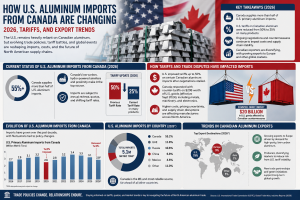
As of 2026, the United States continues to import significant volumes of primary aluminum from Canada, but recent trade negotiations have introduced new tariffs and quotas impacting North American supply agreements. Imports are subject to annual reviews and shifting tariff rates, directly influencing costs for manufacturers and a range of industries that depend on Canadian aluminum.
You may be wondering how much aluminum is actually flowing across the border. Historically, Canada has accounted for more than half of total U.S. aluminum imports, thanks to its robust hydro-powered smelters and integrated North American supply chain. In recent months, however, a reduction of tariffs on Canadian aluminum—down from 50% to 25% on many products—has shifted the calculus for both buyers and suppliers.
Industry leaders have stressed that this remains a vital trading relationship, but ongoing adjustments mean U.S. buyers are watching the terms of trade deals closely. Small changes in policy can ripple out to affect job security and prices of finished goods throughout North America.
Looking further ahead, market watchers expect negotiations over tariff levels, quotas, and retaliatory measures to continue shaping import figures through the next few years.
How Have Tariffs and Trade Disputes Impacted Imports Recently?
Recent trade disputes have directly impacted the flow of Canadian aluminum into the U.S., introducing new duties and sparking retaliatory action. The U.S. imposed aggressive new tariffs—up to 50% on certain Canadian imports—after talks between Washington and Ottawa stalled. In response, Canada has launched countermeasures on a range of U.S. goods, aiming to match the value of American tariffs dollar-for-dollar.
If you manufacture products in North America, these tit-for-tat tariffs hit your bottom line. Costs for raw aluminum products have risen, and uncertainty about next year's rates has made it harder to plan inventory and pricing strategies. According to coverage of Canada's response, Ottawa's counter-tariffs—effective from September 2024—impact $20 billion worth of U.S. goods, including metals, machinery, and electronics imported by Canadian businesses.
Trade experts suggest this pattern of escalations has made the landscape unpredictable for both exporters and importers. On the industry side, some companies are lobbying hard for relief, while others consider shifting sourcing or passing on extra costs to end consumers.
The broader message for anyone in the aluminum supply chain? Tariffs are no longer just tax policy—they're now a central factor in business strategy for 2026 and beyond.
How Have U.S. Aluminum Imports from Canada Evolved Year by Year?
U.S. aluminum imports from Canada have followed a steady, upward trend for most of the past decade, but the numbers tell a more nuanced story when viewed year by year. For example, the years leading up to 2022 saw consistent growth, while new duties in 2020 and 2026 created brief downturns or volatility as markets adjusted to fresh policy constraints.
Statistically, 2022 marked a stable period for cross-border aluminum flows after temporary tariff relief. Import volumes edged slightly higher as manufacturers rebuilt inventories affected by previous disruptions. The resulting figures suggest a resilient relationship, but also one highly sensitive to political decisions and economic shocks.
In 2026, the year began with optimism as negotiations promised tariff relief for a set quota of Canadian imports. But after talks stalled, both countries raised duties again, stifling growth and significantly impacting certain sectors. The data for this year, once finalized, will reflect these dramatic swings caused by ongoing trade disputes.
Looking back, it's clear: each spike and dip in annual figures aligns with changes in policy. For businesses, tracking these yearly numbers is crucial for forecasting and strategic planning.
How Do U.S. Aluminum Imports by Country Compare Globally?
Canada is the dominant source of U.S. aluminum imports, but several other nations also play important roles in fulfilling American demand. Countries like Russia, the United Arab Emirates, and China have periodically increased their market share, though none rival Canada's consistent output.
What sets Canada apart? Geographic proximity, similar regulatory frameworks, and decades of integration mean Canadian aluminum is often the first choice for American manufacturers. Despite occasional surges from other regions, no other country provides the scale, reliability, or cost advantages of the Canadian market.
That said, shifting trade agreements and new tariffs sometimes create opportunities for alternative suppliers to step in. When tariffs spike on Canadian metals, American businesses may increase orders from Middle Eastern or Asian producers to keep prices in check and maintain supply stability.
Yet, even in years marked by intense trade battles, the volume of U.S. aluminum imports from Canada has far outpaced all other country sources—a trend experts expect to persist unless the regulatory environment undergoes a fundamental change.
What Are the Trends in Canadian Aluminum Exports, Including Europe?
Canada's aluminum industry is not just about North America—exports to Europe and other global destinations have become a crucial part of the trade mix. Over recent years, European markets have increased their purchases of high-purity Canadian aluminum, drawn by the product's quality and low-carbon credentials.
If you operate in this space, you’ve probably noticed new export channels opening and growing as a result of shifting tariffs and supply chain disruptions. For instance, when U.S. tariffs make exports less attractive, Canadian producers often divert more supply to customers in Europe and Asia, adapting rapidly to changing demand.
Government support and trade negotiations have also played a role. Comprehensive export data shows that while the U.S. remains the primary destination for Canadian aluminum, many producers have expanded their reach to minimize risk and capitalize on premium markets overseas.
Expect to see Canadian companies continuing to build relationships with European partners, especially as global manufacturing recovers and green supply chain initiatives gain momentum. For both exporters and importers, this evolving picture means a growing list of opportunities—and risks—to manage each year.
Overall, whether you're managing logistics, charting investment strategies, or just keeping an eye on global supply chains, understanding the details behind U.S. aluminum imports from Canada—right down to tariffs, trade war impacts, and yearly trends—will equip you to respond quickly as the market evolves.


One thought on “How U.S. Aluminum Imports from Canada Are Changing: 2026, Tariffs, and Export Trends”