Destination Customs Clearance in Progress on Alibaba: Timelines and Processes
 Import Export
Understanding What "Destination Customs Clearance in Progress" Really Means
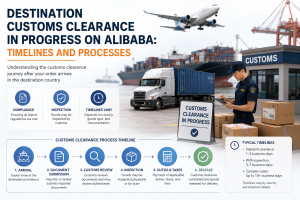
When tracking an international order, seeing the status "destination customs clearance in progress" simply means your package has successfully arrived in your home country and border officials are actively reviewing the commercial invoice, calculating applicable taxes, and verifying product legality before releasing it to the final delivery courier. You do not need to panic. Most packages pass through this routine administrative step within 24 to 72 hours without requiring any direct intervention from the buyer. Officials are merely confirming that the declared value matches the physical goods and assessing whether any import duties are legally owed to the government.
Destination Customs Clearance in Progress on Alibaba Meaning
Tracking statuses can often feel confusing for first-time importers monitoring a DHL alibaba tracking number. You might see a notification stating that the procedure was initiated at destination country, or notice that the process may start while the shipment is in transit to the arrival port. This early initiation happens because modern freight forwarders electronically transmit the ship's cargo manifest to border agencies days before the vessel actually docks. Understanding exactly what custom mean shipping terms indicate helps you accurately predict when the cargo will clear the port. The local authorities use this advance electronic data to pre-screen packages for potential security risks or intellectual property violations. For a broader explanation of these international logistics terms, reviewing a dedicated guide on customs clearance meaning can help clarify the underlying legal processes involved.
A frequent concern for new buyers is whether the cargo does it go straight to Amazon fulfillment centers or require a stop at a secondary warehouse. The answer depends entirely on your agreed Incoterms and your supplier's capabilities. If you are importing inventory for an e-commerce business, you must clearly establish whether the shipment is Delivered Duty Paid (DDP) or Delivered-at-Place (DAP). Under DAP terms, you will inevitably have to ask, "do I have to pay from USA?" because the buyer is strictly responsible for covering all import taxes upon arrival. For detailed seller policies and trade terms, reviewing the official resources on Alibaba's seller portal provides exact guidelines on who bears the financial liability during border inspections.
How Long Does the Clearance Process Actually Take?
Importers constantly ask exactly how long does it take for a standard commercial package to clear the border. While a routine document check normally finishes in one to three days, you must account for the entire door-to-door transit time when calculating how long China take to deliver products. It is completely normal for package to be in customs 4 days during peak holiday shipping seasons, such as late November or right before the Lunar New Year. Border agents process millions of parcels daily, and regional port congestion heavily influences the speed at which containers are physically unloaded and scanned.
When buyers notice their tracking stalling, they quickly wonder why taking so long to ship and how long a delay last in the worst-case scenarios. Sometimes the longest hold 2 weeks or more if border patrol agents flag the container for an intensive physical examination or x-ray scan. The situation at US customs right now is particularly strict following the recent suspension of the de minimis exemption, which now requires formal entry filings and full duty payments for every single commercial package. If your supplier failed to include a detailed commercial invoice or provided vague product descriptions, the holding facility will lock the shipment in a bonded warehouse until you submit the corrected documentation.
Once the legal review concludes, buyers anxiously ask, "after customs will I get my package?" Yes, immediately following the official release, the cargo is handed over directly to the local domestic courier, such as FedEx, UPS, or the postal service, for the final mile delivery. If you are worried about a stalled tracking status, you will be notified if package doesn't clear. The courier acting as your broker will email or call you to request missing tax identification numbers or collect unpaid tariff fees before they are legally allowed to place the box on a local delivery truck.
Navigating Shipping Risks and Avoiding Scams on Alibaba
Procuring goods from overseas manufacturers naturally prompts buyers to wonder, is ordering from Alibaba risky? The platform itself functions as a massive B2B directory rather than a single retail store, meaning your experience depends entirely on the specific factory you choose to hire. When debating whether Temu or Alibaba better serves your needs, you must recognize that Temu is a B2C app for cheap individual consumer goods, whereas Alibaba is designed for bulk wholesale manufacturing. Similarly, determining which has faster shipping AliExpress or Alibaba comes down to the shipping method selected; AliExpress utilizes cheap postal packets for single items, while wholesale orders move via slower, heavy ocean freight.
A highly persistent fear among new importers is the presence of counterfeit goods, leading them to constantly ask, are there fake items on Alibaba? The platform strictly prohibits intellectual property theft and actively removes infringing listings, but unauthorized replicas still occasionally slip through the automated filters. To successfully avoid getting scammed on Alibaba, you must rigorously vet your suppliers by verifying their business licenses, insisting on physical samples, and exclusively paying through the secure Trade Assurance escrow system. If border officials discover counterfeit branded merchandise during a random inspection, they will immediately seize and destroy the entire shipment, leaving the importer facing a total financial loss and potential legal fines.
If you suspect an issue, you might wonder, can I check if stuck customs independently? You cannot directly call the border patrol agency to locate a single box in a massive port terminal. Instead, you must contact the designated freight forwarder or customs broker who filed the entry summary on your behalf. Many small importers choose to use procurement agents like Superbuy to handle the complex communication and logistics on the ground before the goods ever leave Asia. By having a trusted third-party inspect the merchandise and verify the commercial paperwork, you heavily reduce the risk of non-compliance rejections at the destination port.
Strategies to Speed Up Clearance and Secure Delivery
To proactively speed up clearance and avoid paying exorbitant daily storage fees at a bonded warehouse, you must prepare the legal paperwork long before the vessel leaves the origin port. The primary cause of border delays is almost always a discrepancy between the declared product value and the actual wire transfer payment receipt. You must strictly force your supplier to declare the exact, mathematically accurate transaction value on the commercial invoice. You might occasionally read highly speculative advice on a reddit meaning Alibaba forum regarding the supposed hidden complexities of international shipping, but you should always rely on official customs documentation rather than internet rumors to secure your freight.
You must also ensure that every single item on the packing list is assigned the correct 10-digit Harmonized Tariff Schedule (HTS) code. If your factory slaps a generic classification code onto a highly regulated electronic device, the automated entry system will flag the discrepancy and demand an intensive manual review. Working directly with a licensed customs broker allows you to pre-classify your entire product catalog and secure a continuous customs bond. For a comprehensive breakdown of exactly how to manage these legal filings, you can study the U.S. customs clearance guidelines for imported goods.
Ultimately, successfully navigating international trade logistics requires a solid understanding of exactly what destination progress mean within the broader scope of global freight. When that specific tracking update appears on your screen, it simply signals that your inventory has reached the final regulatory hurdle before domestic delivery. By maintaining accurate commercial records, choosing reliable shipping partners, and understanding your specific tax liabilities upfront, you transform a potentially stressful border inspection into a highly predictable, standardized operational step. Patience and proactive document preparation remain the absolute best tools for ensuring your international cargo arrives safely and on schedule, and taking these basic precautions guarantees your products clear the port without unnecessary administrative friction.