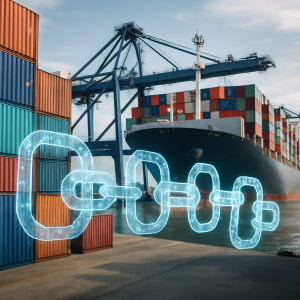
How Blockchain Logistics Companies Are Transforming Supply Chains With On-Chain Assets
 Import Export
How Blockchain Logistics Companies Are Transforming Shipping and Supply Chains
Blockchain logistics companies are redefining supply chain management by introducing transparent, decentralized, and automated solutions through smart contracts and on-chain assets. This shift is not just theoretical—companies like EthraShip offer practical examples of how blockchain-based technologies are being applied today to improve shipping efficiency, reduce fraud, and increase trust across the value chain. These advances answer growing calls for greater reliability in trade, and they're starting to reshape the very basics of supply chain decisions for enterprises worldwide.
Understanding the Role of Blockchain in Supply Chain Technology
Supply chains have traditionally relied on manual paperwork, siloed databases, and slow communication, leading to delays, inaccuracies, and costly inefficiencies. Blockchain technology changes this landscape by enabling a single, immutable ledger shared across all participants—from manufacturers to shippers and end customers. This transparency increases accountability and decreases the likelihood of disputes, as transactions are visible and cannot be altered retroactively.
The core meaning of blockchain in this context is the ability to encode trust directly into digital infrastructure. Instead of relying on third-party auditors or legacy tracking systems, smart contracts automate enforcement of agreements. Every movement of goods, transfer of ownership, or payment release is recorded on-chain, leaving an easily auditable trail. As highlighted by studies like the World Bank's review of blockchain in transportation, this new approach dramatically reduces reconciliation timeframes and errors.
For supply chain startups and established companies alike, integrating blockchain isn't only about adopting new technology. It's about redefining what is possible. These solutions introduce tamper-resistant records that answer modern regulatory and market demands while remaining robust to internal errors or external manipulation. In layman terms, it's like having a digital notary built into every step of the supply chain.
Supply Chain Smart Contracts: Case Studies and Real-World Examples
Case studies of supply chain blockchain adoption illustrate both the operational and strategic benefits. For example, projects like IBM's Food Trust integrate multiple supply chain partners on a single permissioned blockchain, improving recall accuracy and consumer safety. Shipping networks like Maersk's TradeLens use smart contracts to automate documentation workflows, cutting port dwelling times and reducing human error.
EthraShip, mentioned as a practical solution in the discussion of real-world asset (RWA) adoption, uses decentralized shipping to track on-chain asset ownership. Every shipment or transfer is recorded as a blockchain transaction. The system enables automated compliance checks and lowers administrative overhead. This aligns with evolutionary trends discussed in academic bibliometric reviews of blockchain-powered supply chains, which find consistently reduced fraud rates and operational costs when traditional processes are replaced by smart contracts (WTO Blockchain Report).
By analyzing these use cases, it becomes clear that the purpose of using blockchain in the sector is not just technological novelty. It's a means of providing verifiable, real-time visibility—making global trade more resilient, especially in complex or high-stakes markets.
How Blockchain-Enabled Trackers and IoT Are Reshaping Global Trade
One of the most celebrated elements of modern blockchain logistics management is the pairing of on-chain systems with Internet of Things (IoT) devices. With sensors embedded in cargo, environmental data and location can be sent immediately to a blockchain ledger, creating a continuous record accessible to all authorized stakeholders. This makes supply chain tracking both real-time and tamper-evident.
Companies such as UPS and DHL have piloted these systems for high-value shipments, showing significant reductions in loss or delay. For startups entering the supply industry, open-source blockchain tracking systems on platforms like GitHub allow them to build custom solutions tailored to unique trading needs. These smart contract-enabled systems not only help with logistics, but also with regulatory compliance and dispute resolution—a key area for cross-border shipping where trust can be hard to establish.
In this context, a supply chain tracker or tracking system does more than mark the location of goods. It provides an accountable chain of custody for every asset, enforceable by code, and visible across the market. This opens the door for new market decisions and even financial products based on provable ownership and movement of goods.
The Basics, Definitions, and Future Trends in Blockchain-Based Supply Chains
At its core, a blockchain supply chain system consists of three parts: a shared data ledger, a set of smart contracts governing transactions, and a network of participating nodes running the protocol. These basics enable instant verification of data and fully automated process execution. Definitions evolve rapidly as new use-cases emerge, but the core principles remain focused on trust, transparency, and efficiency.
As leading supply chain management books and industry case studies emphasize, the evolutionary shift towards blockchain is accelerating. Early pilots have matured into robust platforms, and regulatory bodies are beginning to issue official guidance and support for blockchain-based trade documentation and customs processes. Users and companies interested in understanding the technology or reading introductory material can often access comprehensive PDFs and reports from global agencies or even from blockchain project repositories directly.
The market for blockchain logistics companies is forecasted to expand rapidly as more firms grasp how digital ledgers and smart contracts can be used in their specific industries. Even traditional sectors like agriculture, oil and gas, and pharmaceuticals are now joining early adopters in exploring how blockchain can enhance supply chain integrity, cost control, and compliance with global trade rules.
Making Smart Decisions: The Purpose and Future of Technology in Supply Chains
What drives companies to adopt blockchain technology in the supply sector? The answer lies in the combination of risk reduction, competitive advantage, and regulatory readiness. Automated, data-driven decision making is becoming a defining feature of modern logistics, as businesses seek to eliminate uncertainty and respond rapidly to market fluctuations or disruptions.
The use of IoT and on-chain data not only informs day-to-day management, but also provides a reliable basis for long-term strategic planning. Businesses gain a holistic view into their operations, empowered to optimize inventory, cut waste, and respond to real-time changes across global networks. This helps supply chain managers balance efficiency with resilience, crucial in today's unpredictable world.
- Automated Compliance: By integrating coded regulatory checks into smart contracts, companies can instantly prove legal adherence without manual documentation. As global trade regulations grow ever more complex, automation ensures that supply chains stay in compliance without the drain of constant oversight.
- Transparent Auditing: Blockchain-led audits replace months of paper-based reconciliation with instantaneous, tamper-proof records. This not only reassures business partners and regulators, but also speeds up dispute resolution and payment processes.
As seen in real-world implementations and supported by leading economic research, the market role of blockchain logistics companies is set to grow. Supply chain basics are shifting—from opaque and fragmented systems to transparent, trusted, and frictionless global trade.
Blockchain logistics companies are more than a trend—they represent a foundational advancement in how goods are managed, tracked, and trusted around the world.