How Trade Tariffs and Import Fees Reshape the Global Economy: Impacts on the US, Turkey, and Beyond
 Import Export
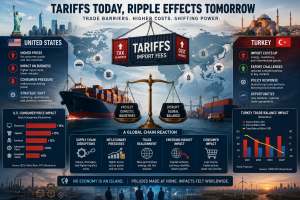 Understanding the Immediate Impact of Tariffs on International Trade and the US Economy
Tariffs and import fees directly alter international trade flows and affect the day-to-day lives of consumers and producers in the United States, Turkey, and around the world. When governments, such as the US under recent administrations, increase tariffs on imported goods, both the prices of imported products and the costs for domestic manufacturers who rely on foreign components rise. This generally leads to higher consumer prices, decreases in trade volume, and shifts in global supply chains—a reality confirmed by extensive economic research from organizations like the World Trade Organization. The immediate consequence: higher costs for businesses and everyday purchasers, reduced choices on store shelves, and a measurable dent in GDP growth for participating countries.
Why Tariffs Matter: Trade War Consequences for US, Turkish, and Global Markets
Trade wars, triggered by rising tariffs between economic giants such as the US and China, have had far-reaching effects on countries like Turkey and on the global economic landscape. For instance, when the US imposes tariffs or import duties, the increase isn’t only felt in American markets—Turkish exporters are hit with higher costs when shipping goods to US buyers, while Turkish consumers find imported American products more expensive and less accessible. Research by the World Bank demonstrates that tariffs reduce total trade volume, alter supply routes, and disrupt long-established production chains.
In Turkey’s context, as suggested by observers warning of destabilization in the Middle East, these economic policies compound existing regional tensions. As tariffs pile up, Turkish sellers face increased competition in their export markets and must often lower their margins to stay competitive. Meanwhile, the weakening Turkish lira makes importing US products more expensive, intensifying the impact on inflation and real wages domestically.
Tariff wars also provoke retaliatory measures. When the US raises tariffs on steel, for example, Turkey and other countries may respond with their own duties on American goods like cars or agricultural products. This feedback loop escalates trade tensions—the cumulative effect being global uncertainty and a stalling of cross-border investment.
How Import Fees and Duty Rates Influence Pricing, Spending, and Inflation
Import fees, sometimes called customs duties, are imposed by governments to protect domestic industries or to retaliate against perceived unfair trade practices. These additional costs are added either at the point of delivery or paid upon importation, as detailed by most carriers in documents like the UPS® United States Terms & Conditions of Carriage. Import fees usually include value-added tax (VAT), excise tax, or other surcharges determined by the customs calculator and international duty estimator specific to each country.
For consumers, these fees translate into higher final prices at the checkout or when paying shipping charges on a package delivered from abroad. If a Turkish business imports high-value electronics or raw materials from the US, the ultimate cost includes shipping rates, customs assessment, and import duties, which can surpass the cost of the product itself depending on the tariff structure and global logistics costs. This directly impacts inflation, particularly when compounded by a weakening currency or cross-border regulatory changes.
From the perspective of production and spending, higher import fees can drive businesses to seek alternative suppliers, relocate manufacturing, or pass on charges to customers. The result: consumer goods become more expensive, business margins shrink, and inflationary pressures intensify—outcomes that are particularly acute during turbulent periods of global trade re-negotiation.
The Economics of Customs, Duties, and Taxation: Who Bears the Real Cost?
Tariffs and duties are typically collected by customs authorities at the point of entry based on a product’s declared value and applicable trade agreements. The United States, through its international duty fare and freight invoice regulations, provides detailed breakdowns on how rates are assessed, which often vary by product category and trading partner. In practice, the cost is almost always passed on to end-users—either through higher prices on store shelves or as direct surcharges when paying online for imported goods.
For American consumers, the taxes and fees assessed on imported products from Turkey or the EU can be surprising. These costs are generally not subject to sales tax alone; they may also include federal excise taxes, fees on electronics, and other regulatory charges. Likewise, Turkish importers looking to the US market must factor in not only the cost of shipping but also compliance with both countries’ import regulations and duty schedules.
Many misunderstand who truly bears the cost. While tariffs are officially levied on the importing company, economic studies show that companies typically cannot absorb all additional expenses and inevitably adjust their retail or wholesale rates. The final cost, then, is absorbed by consumers, affecting their spending habits and their ability to purchase high-value goods or international products.
Measuring Tariff Effects: From Economic Growth to Production Outcomes
Global economic reports—such as those published by the OECD and the WTO World Trade Report—make clear that sustained or rising tariffs decrease trade volume, slow GDP growth, and reduce economic efficiency. For the US and Turkey, these effects vary: the US can absorb more of the shock due to its large domestic market, while smaller economies like Turkey face steeper relative declines in trade, employment, and output.
Tariffs also shift the balance between producers and consumers. Short-term, some US-based or Turkish manufacturers may benefit from reduced foreign competition. However, as higher production costs are passed onto buyers and input costs rise, the benefit quickly dissipates. Long-term, economies see a reduction in productivity and competitiveness, making domestically produced goods less attractive on the world stage.
The trade war’s effects on inflation and economic growth are often profound. As tariffs increase the cost of imported raw materials, manufacturers must make hard choices—absorb losses or raise prices. Regional inflation, especially when compounded by other geopolitical tensions, can erode real wages and reduce purchasing power, which ultimately suppresses wider economic activity.
Practical Steps and Policy Responses: Navigating the Next Phase of Global Trade
For businesses and policymakers in both the US and Turkey, understanding how to estimate shipping charges, customs, duties, and international taxes is paramount. Utilizing official customs calculators and frequently updated tariff schedules helps companies anticipate costs and make strategic decisions about procurement and supply chains. The US International Trade Administration and country-specific trade ministries provide guidelines on duty calculation, allowing more accurate pricing that reflects the real costs of global commerce.
- Adapting Logistics Strategies: Businesses often shift foreign sourcing or adjust supply chains to minimize exposure to the most punitive tariffs. For example, Turkish exporters may seek new markets in the EU or Asia if access to American buyers becomes prohibitively expensive. Each pivot involves months of negotiation, regulatory compliance, and sometimes a complete overhaul of business models, as documented in WTO studies.
- Deploying Technology: Companies increasingly rely on real-time duty estimators and digital shipping platforms, making it easier to track, plan, and respond to changing tariffs. This technological adoption not only streamlines logistics but also provides the agility necessary to stay competitive despite shifting trade barriers. However, technology alone can't erase tariff costs; it merely makes the process more transparent and manageable for logistics teams.
Policymakers, meanwhile, must balance the short-term appeal of protectionism with the long-term benefits of open trade. While tariffs might protect select industries and generate government revenue, excessive reliance on these tools depresses overall growth and sets the stage for retaliatory cycles that hurt consumers, producers, and exporters alike. The economic literature consistently favors negotiated trade agreements and regulatory predictability over ad hoc tariff escalations.
Tariffs, import fees, and shifting global trade policies are more than lines in a policy document—they shape prices in local supermarkets, the availability of imported electronics, and the resilience of national economies in the face of global shocks.