E-commerce Last-Mile Delivery: Costs, Tracking, and Practical Options
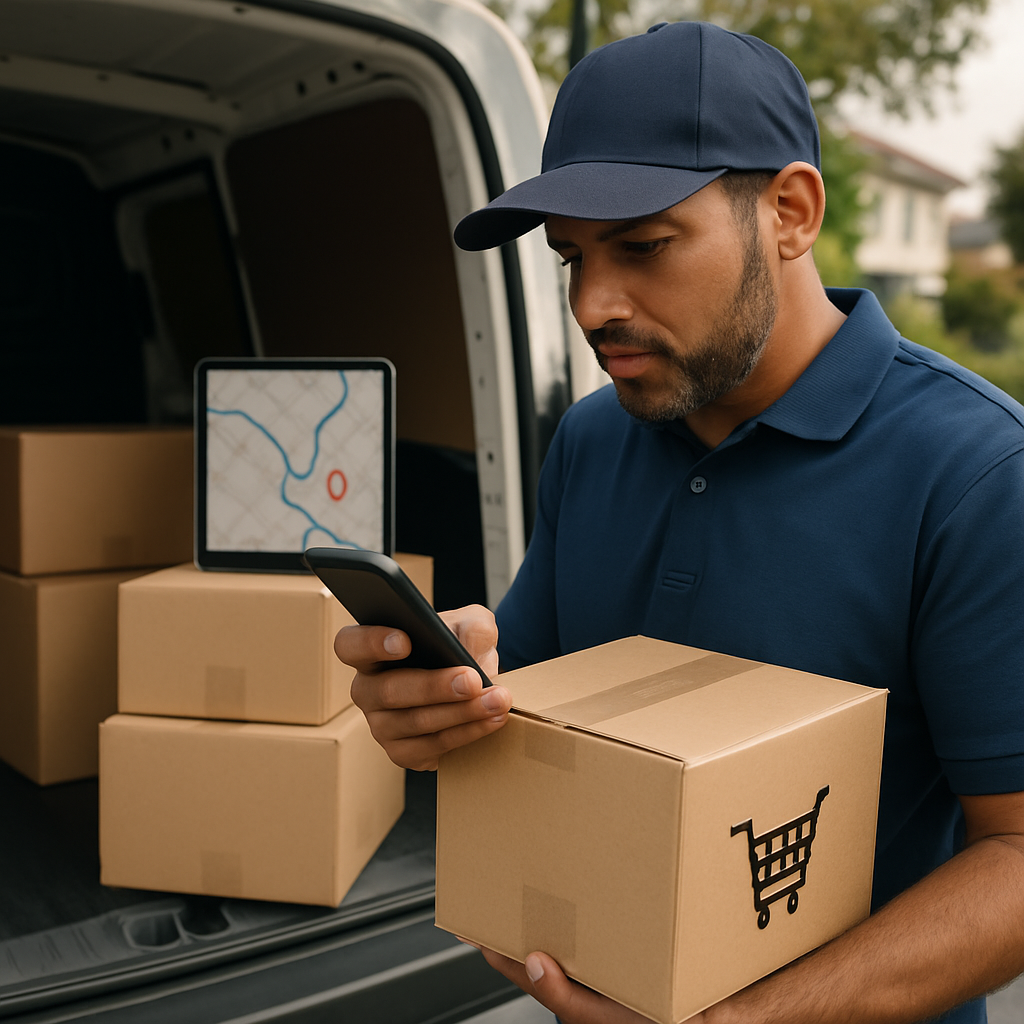
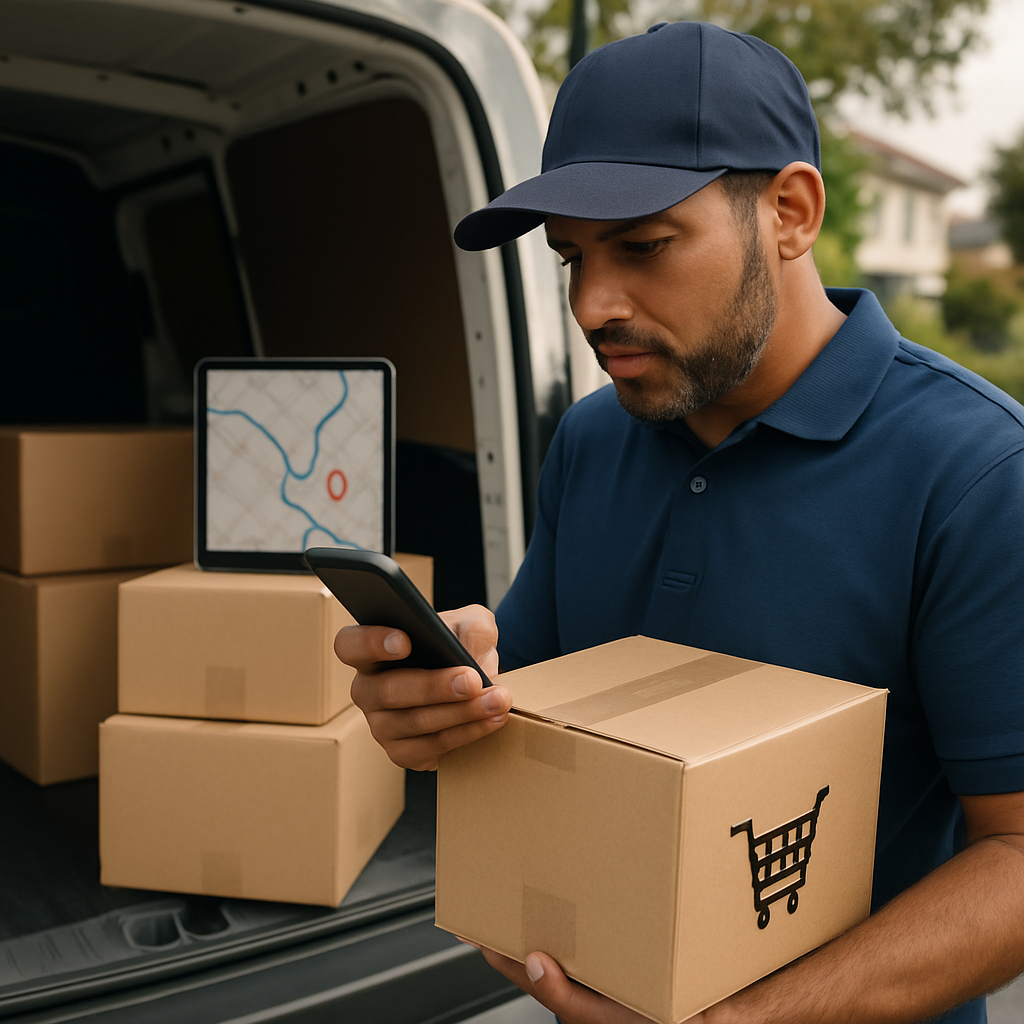
E-commerce last-mile delivery is the final movement of an online order from a local warehouse, shop, or delivery station to the buyer’s address, parcel locker, or collection point. It is the part of fulfilment customers see most clearly: the delivery window, tracking updates, condition of the parcel, and success of the handover all shape their view of the seller. For retailers, the task is to offer reliable delivery without allowing dispersed, individual drops to erode margins.
What does e-commerce delivery mean?
E-commerce delivery covers the journey from an online order being released for fulfilment to its arrival with the customer. It can include picking and packing, label creation, line-haul transport to a regional facility, sorting, and the final mile. Last-mile delivery is only the last of those stages, but it is often the most complicated because one vehicle must serve many separate addresses, delivery preferences, and time windows.
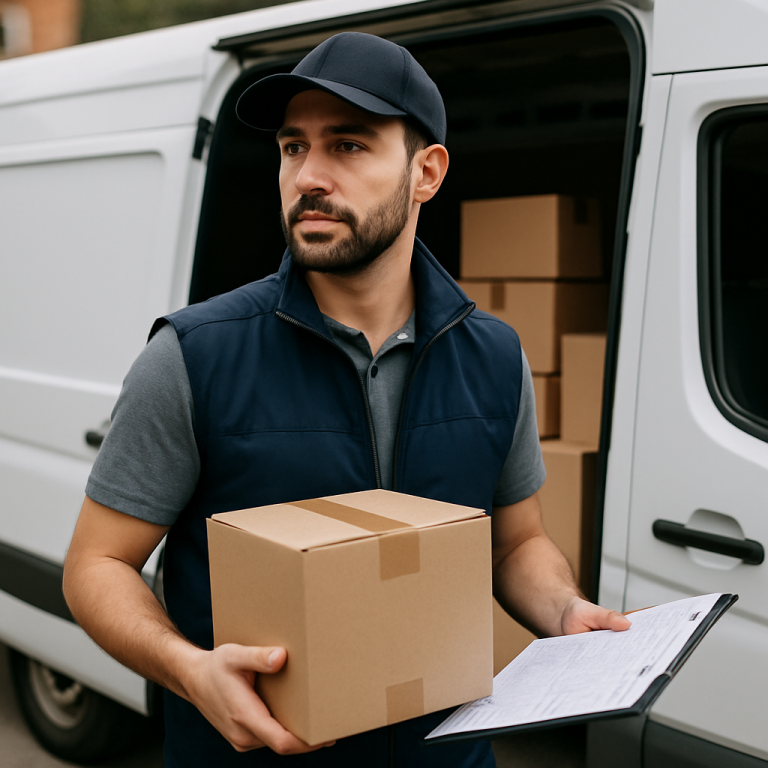
Final-mile delivery may be made by van, car, cargo bike, or another suitable local mode. It can also end at a staffed collection point or parcel locker rather than at a doorstep. DHL describes the final mile as the leg from a local distribution centre to the consumer, with delivery options that can include home delivery and drop-off locations such as supermarkets or lockers.
How the last mile works in logistics
A typical parcel passes through a fulfilment centre and one or more transport or sorting nodes before reaching a local delivery network. Once the parcel is allocated to a local route, the final-mile carrier loads it for delivery or sends it to a collection location.
- Order fulfilment: the seller or fulfilment partner picks, packs, labels, and dispatches the order.
- Transport and sorting: parcels move to regional or local facilities, where they are sorted by route or postcode area.
- Local routing: delivery-management software groups stops, assigns a driver or courier, and may adjust the route for traffic or delivery commitments.
- Final handover: the parcel is delivered to the address, left according to authorised instructions, or made available at a locker or pickup point.
For an international e-commerce order, customs clearance normally happens before the domestic last-mile leg. The final-mile operator may receive the parcel from a postal service, express courier, or cross-border logistics provider after clearance and sorting. That hand-off can explain why tracking changes carrier names or pauses between updates.
What does a last-mile delivery station mean?
A last-mile delivery station is a local operating site where parcels are received, sorted into delivery routes, and loaded onto vehicles or given to couriers for nearby deliveries. It is not necessarily the retailer’s warehouse, and it is not a customs location simply because a parcel is present there.
These stations place inventory or parcels closer to customers, reducing the distance a driver travels on the final route. Retailers may also use smaller urban fulfilment hubs, local shops, and pickup-drop-off networks to shorten doorstep routes and reduce failed delivery attempts. FarEye’s overview of e-commerce last-mile operations identifies micro-fulfilment hubs and pickup networks as approaches that can reduce the distance between stock and the customer.
Why last-mile delivery is expensive
The final mile combines high customer expectations with inherently fragmented work. A trunk vehicle can carry a large volume between facilities, whereas a local driver must make many individual stops, deal with congestion, find addresses, wait for access, and manage unsuccessful delivery attempts. Project44 notes that last-mile costs can represent more than half of total shipping costs, which is why route design and delivery choice matter so much.
Costs and service performance are affected by:
- delivery density and the distance between stops;
- traffic, parking restrictions, weather, and building access;
- failed first attempts, returns, and redelivery;
- the required speed, such as same-day, next-day, or nominated-day service;
- parcel size, handling needs, and whether a signature is required; and
- the cost of drivers, vehicles, fuel, insurance, and delivery technology.
The environmental cost matters too. Frequent stops, idling, and urban congestion can make this stage emissions-intensive, as Ryder’s explanation of last-mile delivery costs notes. Consolidated routes, electric vehicles where suitable, collection points, and cargo bikes in dense areas may help, but each option has its own operating constraints.
Is last-mile delivery profitable?
It can be profitable, but it is not automatically profitable. The result depends on route density, delivery fees, labour model, fleet utilisation, failed-delivery rates, technology costs, and the level of service promised to customers. A sparsely populated route with narrow delivery windows can be far less economical than a dense route with flexible delivery choices.
For a retailer, profitability should be assessed across the whole order, not just the delivery charge shown at checkout. Free shipping may support conversion or repeat purchases, while its cost is recovered through product margin, minimum-order thresholds, membership fees, or a mix of delivery options. For an independent contractor completing final-mile routes, income also depends on the contractual rate, route volume, vehicle and fuel expenses, insurance, and unpaid time; it should not be judged by gross payment alone.
Accurate delivery promises can protect margins as well as customer satisfaction. Clear fees, available time slots, tracking, and proactive notifications reduce uncertainty for buyers and may reduce costly “where is my order?” contacts. FarEye’s discussion of shopper expectations links transparent costs, delivery windows, and accurate estimated arrival information with a better post-purchase experience.
How long does last-mile delivery take?
There is no universal last-mile delivery time. Once a parcel reaches the local network, it may be delivered the same day, on the next scheduled delivery day, or later if the chosen service, route capacity, address access, or an exception prevents delivery. The seller’s processing time, long-distance transport, and customs clearance for cross-border parcels are separate from the final-mile transit time.
When comparing delivery services, distinguish between a carrier’s stated transit service and the full customer-facing lead time. A same-day or next-day promise usually depends on a cut-off time, stock being available locally, and the destination falling within the service area. DHL notes that consumers increasingly expect choices such as next-day, same-day, and even short delivery windows, making operational planning particularly important.
Last-mile delivery tracking: what customers should look for
Tracking is most useful when it tells the customer what action, if any, is needed. Updates such as arrival at a local facility, out for delivery, delivered to a pickup point, or delivery attempted usually indicate where the parcel is in the final-mile process. An update may be delayed when a parcel is moving between scans, being sorted, or transferred between delivery networks; it does not by itself establish that the parcel is lost.
Retailers should provide the tracking number promptly, identify the final-mile carrier where possible, and send clear exception messages. Customers can help avoid failed delivery by checking the address, entry instructions, phone number, and any collection deadline. If tracking shows an attempted delivery or a collection-point arrival, the carrier’s delivery notice normally gives the next practical step.
Which companies use last-mile delivery?
Nearly every business that sells physical goods online uses a last-mile arrangement, whether it operates its own fleet or buys the service from a carrier, courier, postal operator, or third-party logistics provider. Established parcel networks such as FedEx, UPS, and USPS handle large volumes of U.S. e-commerce orders, while retailers may combine them with regional providers, local couriers, or specialised grocery, pharmacy, and large-item delivery services. Onfleet’s overview of last-mile delivery companies describes the continuing role of traditional parcel carriers alongside newer delivery providers and 3PLs.
The best model depends on the product and customer promise. A merchant shipping standard parcels nationwide may rely on a parcel carrier; a grocer may need scheduled local delivery; and a furniture seller may require appointment-based or white-glove delivery. The practical objective is the same: give customers a dependable final handover while matching the delivery method to the order’s cost, urgency, and handling requirements.
For sellers, last-mile delivery should be designed at checkout rather than treated as an afterthought. Offer delivery choices you can support, set realistic cut-off times, make tracking easy to find, and use collection points where they suit your customers. That approach turns the final mile from a frequent source of complaints into a manageable part of the e-commerce service promise.