Screw Compressor Market 2026–2030 Forecast: Industrial Trends, Technology Shifts, and Global Growth
 Import Export
The global screw compressor market is valued at approximately USD 13.97 billion and is projected to reach USD 18 to 21 billion by the early 2030s, expanding at a steady compound annual growth rate (CAGR) of 5% to 6%. This sustained market growth is driven by escalating industrial automation, mandatory energy-efficiency regulations across manufacturing plants, and rising capital expenditures in the oil and gas and food processing sectors. Oil-injected models hold the largest market share at roughly 68% due to their exceptional durability and lower initial acquisition costs, while oil-free systems are expanding faster to satisfy stringent contamination standards in pharmaceuticals, electronics, and food and beverage processing.
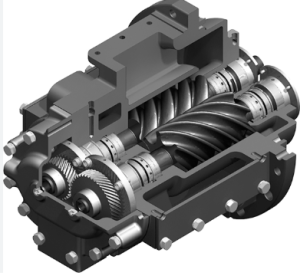
Screw Compressor
Global Screw Compressor Market Forecast: Growth Drivers and Regional Dynamics
Analyzing a standard screw compressor market graph from the 2023 baseline through the current decade reveals a clear structural upward trajectory tied directly to global manufacturing automation. Industrial facilities increasingly replace outdated, energy-intensive compressed air systems with high-efficiency rotary screw packages that lower baseline electricity consumption. The North America screw compressor market 2026 forecast indicates robust capital spending driven by industrial reshoring, aggressive decarbonization mandates, and the ongoing modernization of aging manufacturing infrastructure across the United States and Canada. Similar growth momentum across European industrial hubs reinforces how energy-efficiency directives compel facility managers to upgrade their utility operations.
Geographically, the Asia-Pacific region commands the largest regional share of the industry, capturing over 41% of global revenues. Rapid industrialization, heavy government investments in municipal infrastructure, and massive factory output across China, India, and Southeast Asia generate steady demand for low-pressure and medium-pressure industrial compressors. North America and Europe follow closely behind Asia-Pacific, where market expansion is heavily supported by brownfield facility retrofits, strict emissions regulations, and corporate net-zero carbon pledges that prioritize energy recovery systems.
When examining end-use sectors across the comprehensive MarketsandMarkets screw compressor market analysis, general manufacturing remains the largest volume consumer of rotary compressed air systems. Manufacturing plants rely on compressed air to drive pneumatic assembly tools, actuate packaging machinery, and power automated conveyor systems. Simultaneously, the oil and gas sector represents the fastest-growing application segment, where heavy-duty screw compressors handle wellhead gas gathering, vapor recovery, and pipeline pressure boosting across remote exploration sites.
Technology Evolution: Oil-Injected vs. Oil-Free and Multi-Stage Systems
Answering what is a compressor in the context of positive-displacement mechanics requires examining how intermeshing helical rotors trap and compress atmospheric air within a machined stator housing. Unlike dynamic centrifugal blowers, rotary screw machines reduce the volume of a trapped air pocket continuously along the rotor axis to build pressure. Plant engineers generally categorize these machines into three different types based on internal chamber lubrication: oil-injected (lubricated) compressors, dry oil-free compressors, and water-injected systems engineered for specialized hygienic or low-temperature environments.
Oil-injected screw compressors dominate the industrial landscape, capturing approximately 68% of total market revenue due to their operational efficiency and mechanical reliability. In these lubricated systems, synthetic or mineral oil is injected directly into the compression chamber to cool the air during compression, seal the microscopic clearances between the rotors, and lubricate the internal bearings. Because the lubricant absorbs the heat of compression, oil-injected machines achieve high volumetric output and extended service intervals at a significantly lower initial capital cost than non-lubricated alternatives.
Conversely, oil-free rotary screw compressors are experiencing the fastest growth rate across high-purity industries where product contamination carries severe financial and regulatory penalties. In dry oil-free machines, precision external timing gears synchronize the rotors to prevent metal-to-metal contact, entirely eliminating the need for oil inside the compression chamber. This design guarantees ISO 8573-1 Class 0 clean air, making oil-free systems indispensable for pharmaceutical synthesis, semiconductor fabrication, and food processing applications highlighted in the Future Market Insights screw compressor industry forecast.
While single-stage screw compressors satisfy the vast majority of standard 100 to 125 PSI plant air requirements, multi-stage configurations are gaining substantial traction for high-pressure industrial processes. Two-stage rotary screw compressors split the compression workload across two sequential airends, utilizing interstage cooling to reduce thermal stress and overall electrical power consumption by 10% to 15%. This multi-stage architecture is rapidly expanding to support demanding applications such as polyethylene terephthalate (PET) bottle blowing, carbon capture, and high-pressure hydrogen storage.
- Oil-Injected Compression Architecture: Lubricating fluid injected directly into the compression chamber acts as a liquid sealant across the helical rotor profiles, absorbing internal heat and ensuring exceptional volumetric efficiency under continuous industrial loads. This configuration provides the lowest initial acquisition cost and robust mechanical durability, making it the preferred choice for general manufacturing, automotive assembly, and metal fabrication plants.
- ISO Class 0 Oil-Free Architecture: High-precision external timing gears maintain tight tolerances between the male and female rotors without allowing physical contact, eliminating any requirement for lubricating oil inside the air end. Although requiring higher precision machining and larger capital budgets, this architecture prevents aerosolized hydrocarbons from entering downstream airlines, protecting sensitive pharmaceutical, electronics, and food-grade packaging processes from contamination.
Rotary Screw vs. Piston Compressors: Advantages, Disadvantages, and Continuous Duty
Facility managers frequently evaluate whether a rotary screw is better or piston compressors remain more economical for their operational requirements. The primary advantage of owning over reciprocating piston machines lies in the ability of rotary screw compressors to deliver a smooth, continuous flow of compressed air without mechanical vibration or pulsation. While reciprocating compressors rely on pistons, crankshafts, and internal valves that suffer from mechanical fatigue over time, helical screw rotors rotate smoothly with minimal wear, significantly lowering long-term maintenance overhead.
When assessing whether these compressors are any good for heavy manufacturing, the deciding factor is typically their tolerance for continuous duty cycles. Operators often ask whether rotary systems do run constantly; unlike reciprocating piston machines that require 50% to 60% intermittent duty cycles to prevent internal overheating, rotary screw compressors are engineered for 100% continuous duty. They operate at full load 24 hours a day, seven days a week, making them the superior choice for automated production lines that cannot tolerate pressure drops or downtime.
Acoustic performance represents another major operational divergence when evaluating whether industrial compressors are noisy. Reciprocating piston machines generate loud, pounding noise levels that often exceed 85 to 90 decibels, requiring dedicated sound-attenuated compressor rooms or exterior enclosures. In contrast, the smooth rotational mechanics and factory-insulated enclosures of modern screw compressors reduce operational noise levels down to 65 to 75 decibels, allowing operators to install the equipment directly on the open production floor without violating occupational noise regulations.
Despite their technical superiority, engineers must also consider the disadvantages of compressors utilizing rotary screw mechanics. The most prominent limitation is a higher initial capital purchase price compared to simple piston units, which can deter small workshops with low or infrequent air demand. Additionally, rotary screw compressors lose significant efficiency when subjected to short, intermittent demand cycles where the machine frequently idles, making a properly sized piston tank system more cost-effective for light maintenance shops.
Equipment Sizing, Operation Costs, and Why Units Overheat or Surge
Understanding how much does cost to purchase and operate an industrial screw compressor requires looking beyond the initial invoice price to calculate the current price of compressed air per cubic foot per minute (CFM). Electrical power consumption accounts for roughly 70% to 80% of a compressor's total expenditure over a ten-year operational lifecycle, far outweighing the initial equipment purchase and routine maintenance expenses. Consequently, deploying variable frequency drive (VFD) screw compressors that adjust motor speed to match fluctuating plant demand is critical for eliminating idle electricity waste and minimizing cost per CFM.
Procurement planners frequently ask how long will last an industrial rotary screw machine and how many hours it is good for before requiring an overhaul. A well-maintained oil-injected rotary screw airend typically operates reliably for 40,000 to 60,000 operational hours before the internal shaft bearings and rotor tolerances require factory rebuilding. Achieving this extended lifespan requires strict adherence to maintenance schedules, including timely oil filter replacements, separator element changes, and periodic oil sampling to detect early trace metal wear.
When mechanical troubleshooting becomes necessary, maintenance technicians must immediately diagnose what causes overheating in a screw compressor package. High discharge temperature trips are most commonly triggered by degraded synthetic lubricating oil, clogged air-to-oil heat exchangers, malfunctioning thermostatic bypass valves, or restricted room ventilation that prevents cooling fans from rejecting heat. Allowing a machine to run consistently above recommended temperature thresholds accelerates oil oxidation, damages internal rotor varnishing, and risks premature bearing seizure.
Operators also question whether a positive displacement machine can surge in the same manner as a dynamic centrifugal compressor. True aerodynamic surge—where airflow violently reverses direction at low flow volumes—is unique to centrifugal compressors; however, rotary screw units can experience destructive pressure spikes or mechanical chatter if the intake modulation valve or minimum pressure check valve malfunctions. Furthermore, resolving whether you need a tank with a rotary screw system is straightforward: installing a correctly sized external air receiver tank is essential to buffer demand spikes, separate condensed moisture, and prevent the compressor from short-cycling.
Top Global Manufacturers and Best Practices to Select an Industrial Compressor
The competitive industrial landscape is driven by established global engineering firms, prompting procurement teams to investigate who the top 10 manufacturers in the world compressed air markets are today. The global market is anchored by industry leaders such as Atlas Copco, Ingersoll Rand, Hitachi, Elgi Equipments, Kaeser Compressors, Gardner Denver, and Sullair. These primary manufacturers invest heavily in computational fluid dynamics to refine rotor profiles, develop proprietary IoT telemetry for predictive maintenance, and expand their global service networks as detailed in the IMARC Group screw compressor market report.
When evaluating which brand rotary is considered the best for a specific manufacturing facility, plant engineers must assess efficiency ratings, service availability, and total cost of ownership. Selecting an Atlas Copco, Ingersoll Rand, or Elgi package involves evaluating specific power consumption—measured in kilowatts required per 100 CFM of delivered air—verified under ISO 1217 standards. Companies with extensive regional technician footprints and guaranteed replacement parts availability generally offer superior long-term reliability for continuous-duty industrial plants.
Knowing how to select the right compressor package requires auditing the facility's peak and baseline airflow requirements, pressure thresholds, and air quality ISO classifications. Engineers should never oversize a fixed-speed compressor to account for future expansion, as running a large unit at low load capacities causes chronic oil condensation, low operating temperatures, and severe electrical inefficiency. Where air demand varies widely across operating shifts, pairing a base-load fixed-speed compressor with a trim-load VFD screw compressor provides optimal energy efficiency and system redundancy.
- Conducting an On-Site Air Demand Audit: Plant engineers must deploy data loggers across existing distribution piping to measure actual cubic feet per minute (ACFM) consumption and identify pressure drops across production shifts. This empirical data ensures the new screw compressor package is sized precisely to match demand profiles without suffering from low-load electrical penalties.
- Integrating Air Quality Ancillaries and Heat Recovery: Selecting an industrial compressor requires engineering a complete system that includes refrigerated or desiccant air dryers, inline coalescing filtration, and condensate management systems to protect pneumatic tools. Installing automated heat recovery exchangers allows facilities to capture up to 90% of the electrical energy rejected as heat, repurposing it for boiler feedwater preheating or winter facility heating.
As industrial manufacturing continues to advance toward higher automation and stricter environmental accountability, the global screw compressor market will remain a cornerstone of industrial infrastructure. By understanding the mechanical trade-offs between lubricated and oil-free architectures, implementing proper system sizing, and prioritizing lifecycle energy efficiency, facility leaders can optimize plant productivity and achieve long-term operational resilience.
Continue Reading
You may also be interested in: Freight Forwarding Course Guide: Certificate in International Logistics & Job Description Insights