
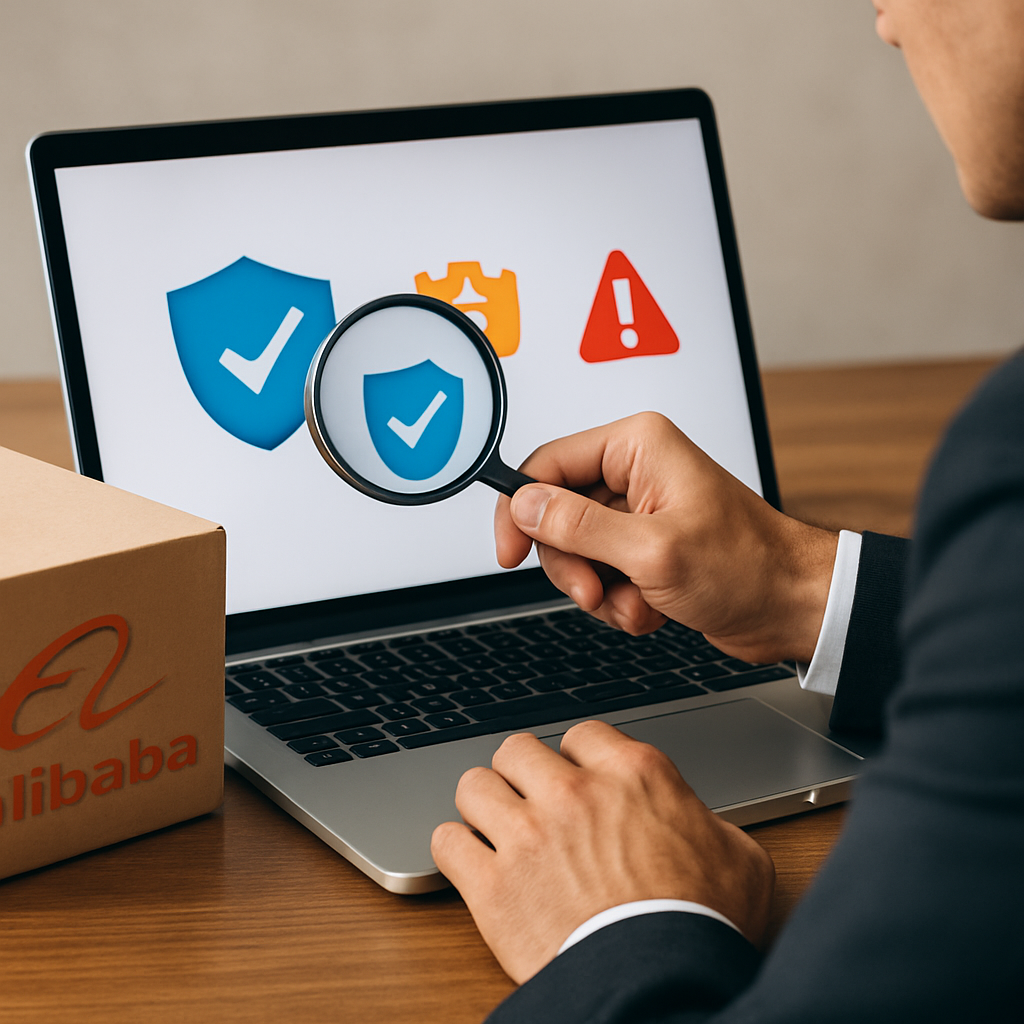
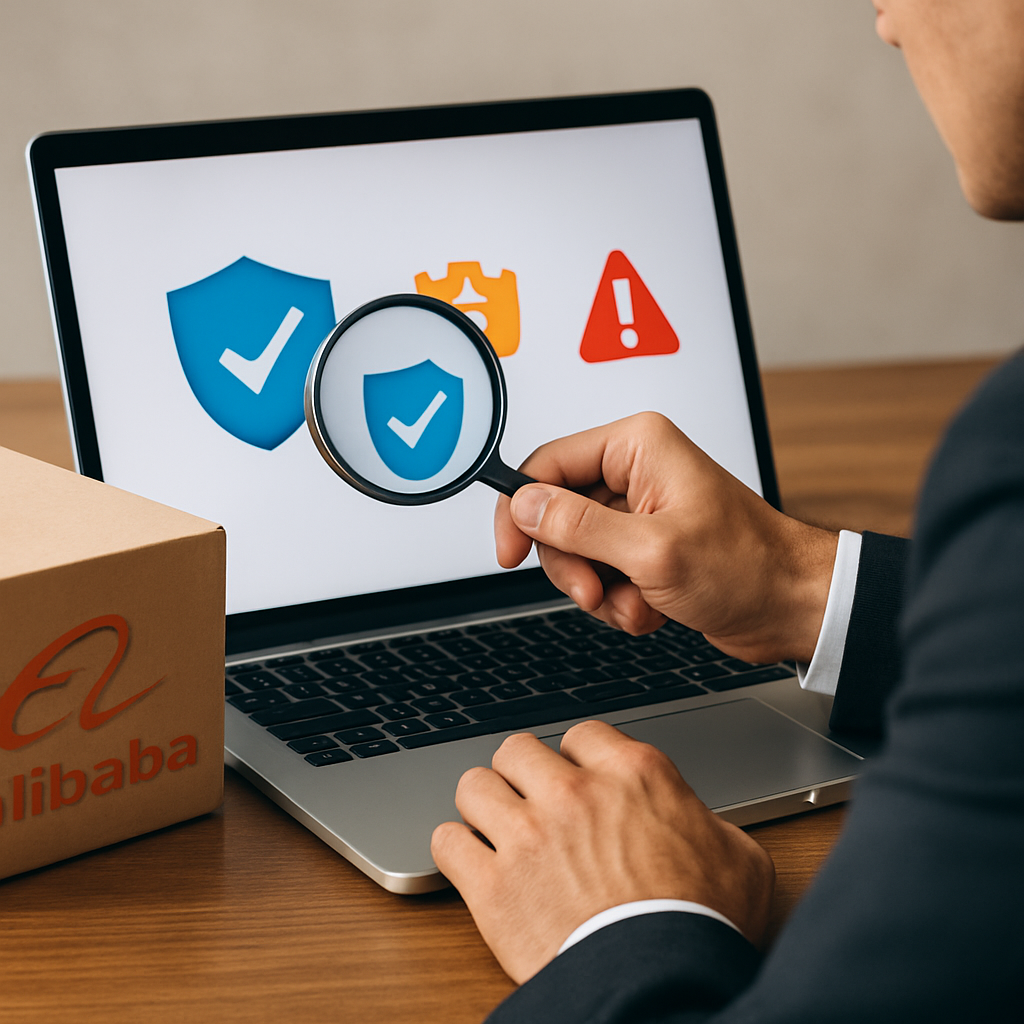
If you want to know how to check if a supplier is real on Alibaba, the short answer is: do not rely on one badge alone. A real supplier is verified by a layered check — company identity, Alibaba profile details, communication consistency, external footprint, and payment protection all need to line up before you trust them.
Many Alibaba suppliers are legitimate, but each one has to be checked individually. A long history on the platform helps, and badges like Verified Supplier and Trade Assurance matter, but neither one proves a supplier is risk-free. The goal is to reduce risk as much as possible before you send money.
How to Check if an Alibaba Supplier Is Real
Start with the Alibaba listing or app profile, then move beyond the platform. A practical vetting process looks like this:
- Review the company profile. Look for a complete profile, clear product focus, production information, and business details that make sense together.
- Check the legal identity. Confirm the company name, registration details, and business licence information if available. If you need a deeper walkthrough, see our guide on how to verify a Chinese business license online.
- Look for evidence of real manufacturing capability. A genuine factory or serious trading company usually shows more than one product, more than one proof point, and a coherent commercial history.
- Cross-check the company outside Alibaba. Search the company name across other marketplaces, business directories, trade fair lists, LinkedIn, and other public sources.
- Test the communication. Ask detailed questions, compare answers, and see whether the supplier responds like a real operation that understands the product.
- Check payment details carefully. Make sure the invoice, bank account name, and company identity match.
You can do all of that in the Alibaba app as well as on desktop. The interface may look different, but the logic is the same: inspect the profile, open the seller’s details, message them, and cross-check every important claim before ordering.
A supplier can have years of history on Alibaba and still be risky if other signals are weak. An old storefront is helpful, but it is not proof of legitimacy on its own.
What to look for in the profile
- Clear business name and company description
- Consistent product category and factory capability claims
- Photos that look like a real operation rather than a copied image set
- Enough detail to explain what the supplier actually makes or sells
- Badges and verification information that match the rest of the profile
If the listing feels thin, vague, or copied from elsewhere, treat that as a warning sign rather than a minor issue.
What Does Alibaba Verified Supplier Mean?
Verified Supplier is a trust signal, not a guarantee. According to Alibaba’s own description, a Verified Supplier is a Gold Supplier whose company profile, management, production capabilities, product, and process have been assessed, certified, and/or inspected by third-party institutions. Alibaba also explains that Gold Suppliers are businesses that have been verified as legally registered by a third-party institution.
That means the badge helps you confirm that some level of business and capability review has taken place. It does not mean the supplier is automatically honest, the products are perfect, or the factory is guaranteed to meet your standards.
In other words, Verified Supplier is useful, but it is only one signal in the wider decision. You still need to check the company identity, communication, external footprint, and payment terms before placing an order.
What the badge can help confirm
- The business has passed some form of third-party assessment or inspection
- The profile is more likely to belong to a real registered company than an anonymous account
- The supplier has met Alibaba’s standards for that badge level
What the badge does not confirm
- That the supplier is a factory rather than a trading company
- That the products will meet your quality standards
- That the company will never scam a buyer
- That your specific order will be problem-free
If you are deciding whether you can trust an Alibaba verified supplier, the safe answer is: trust it as a signal, not as proof.
How Trade Assurance Protects Your Alibaba Order
Alibaba’s Trade Assurance programme is Alibaba’s order and payment protection system for eligible orders placed through Alibaba.com. It is designed to reduce transaction risk, not to prove that the seller is a real factory.
According to Alibaba, Trade Assurance can support refund claims when an order is not shipped, goes missing, or arrives with defects, incorrect items, or damage, subject to the programme rules. That makes it important, because it gives buyers a safety net if something goes wrong after payment.
Before ordering, check for the Trade Assurance icon on the product listing, or ask the seller whether it is offered. Alibaba also advises buyers to keep communication inside the Message Centre rather than moving conversations to third-party apps when using Trade Assurance.
Why Trade Assurance matters
- It adds order and payment protection
- It can help with money-back claims under the programme rules
- It gives buyers more confidence when placing an Alibaba order
But remember the limitation: Trade Assurance is about the transaction, not the supplier’s identity. A supplier can offer Trade Assurance and still need proper vetting.
Alibaba Guaranteed vs Trade Assurance: What Buyers Need to Know
Many buyers search for Alibaba Guaranteed vs Trade Assurance because the terms sound similar. Based on the evidence available here, Trade Assurance is clearly documented as Alibaba’s order and payment protection system. Alibaba Guaranteed is a separate term that buyers often encounter, but the supplied sources do not provide enough authoritative detail to make a full feature-by-feature comparison.
The safest approach is to treat Alibaba Guaranteed as a programme you should read carefully on the specific listing or help page before relying on it. Do not assume it offers the same coverage, eligibility, or dispute rules as Trade Assurance unless Alibaba’s own programme terms say so.
For practical buying decisions, the key point is simple: Trade Assurance protects the order; supplier verification helps assess the seller. They solve different problems.
| Feature | What it helps with | What it does not do |
|---|---|---|
| Verified Supplier | Shows that some company and capability checks have been carried out | Does not guarantee quality, honesty, or scam-free behaviour |
| Trade Assurance | Provides order and payment protection on eligible orders | Does not prove the supplier is a real factory |
How to Find a Good Alibaba Supplier
If your goal is not only to find a real supplier but a good one, you need to look beyond legitimacy. A good Alibaba supplier combines platform trust signals, responsive communication, and external verification.
Use Alibaba filters and profile information as your starting point, then test the supplier before committing to samples or production. Ask follow-up questions about product specs, lead times, packaging, certifications, minimum order quantity, and whether they can support your market requirements.
A practical “good supplier” checklist
- Complete and detailed company profile
- Relevant product history and production evidence
- Responsive, specific, and professional communication
- Presence outside Alibaba in other credible sources
- Clear payment structure and matching company details
- Willingness to discuss samples, inspection, and order protection
A supplier that answers quickly but vaguely is not necessarily better than a slower supplier with solid evidence. Look for consistency and detail, not just speed.
Once you have identified a supplier worth considering, it is also sensible to think ahead about terms. You may want to read our guide on negotiate on Alibaba after you have confirmed the seller is genuine.
Alibaba Scam Red Flags: How to Spot a Fake Supplier
The strongest scam checks are based on pattern recognition, not one single test. A supplier can have a badge, years on the platform, or a polished storefront and still be risky if the wider picture does not add up.
Red flags that deserve attention
- No meaningful external presence. If the company appears only on Alibaba and nowhere else, that is a weak sign. A real manufacturer often has some footprint across other platforms or public business sources.
- Suspicious communication timing. A legitimate mainland China operation is usually active during China business hours. If messages are ignored during local working hours but the replies suddenly arrive at odd times with strange timing patterns, be cautious.
- Inconsistent company identity. The company name on Alibaba, the invoice, the bank account, and the contact details should make sense together.
- Mismatched payment details. If the bank account name does not align with the business you are dealing with, stop and verify before sending money.
- Only one source of truth. If all you can find is an Alibaba storefront and nothing else, you have very little independent confirmation.
A practical external-footprint check means searching the company name across 1688, Made-in-China.com, Global Sources, LinkedIn, trade fair exhibitor lists, industry directories, and other public sources. If you search the Chinese company name and find nothing but the Alibaba page, treat that as a serious warning sign rather than a coincidence.
One useful pattern to watch for is a listing that looks “Chinese” on the surface but behaves like it is being managed from somewhere else entirely. If the communication style, business hours, and company identity do not fit a real Chinese operation, pause and investigate further.
For a more detailed breakdown of the red flags and verification logic, see this guide on spotting fake suppliers on Alibaba.
Are Alibaba Suppliers Real?
Yes, many Alibaba suppliers are real businesses. The problem is that “real” does not automatically mean “reliable”, “honest”, or “right for your order”. Some are factories, some are trading companies, and some listings may be misleading or poorly controlled.
That is why the correct approach is not to ask whether Alibaba suppliers are real in general. Instead, ask whether this specific supplier is real, consistent, and appropriate for your purchase.
A supplier is much more believable when several things line up: company registration, profile depth, outside presence, clear responses, matching payment details, and a sensible order process.
What to Do After You Have Shortlisted a Supplier
Once a supplier passes your initial checks, do not jump straight into a big order. Ask for samples where appropriate, confirm specifications in writing, and consider independent inspection before full production or shipment.
If you want the broader process after supplier vetting, our guide on the full manufacturer sourcing workflow is a useful next step. If you are placing a larger order, a third-party inspection in China can be an important extra safeguard.
If something goes wrong later, or the supplier turns out to be unreliable, our guide on how to get money back from a Chinese supplier explains the next steps.
Final Takeaway
If you are trying to check whether a supplier is real on Alibaba, the safest method is layered verification. Use the profile, verify the company identity, compare payment details, check for Trade Assurance, look for a meaningful external footprint, and test the supplier’s communication before you buy.
Verified Supplier and Trade Assurance are useful, but they do different jobs. Verified Supplier helps you assess the seller. Trade Assurance protects the order. Neither one should replace common-sense due diligence.
If you keep that distinction clear, you will be far better placed to avoid scams and choose a supplier that is genuinely worth doing business with.
If you are comparing sourcing routes after learning how supplier checks work, you may also want to read our guide to compare Alibaba with other sourcing options.