
The short answer is that there is no single master list of items you can never ship internationally. Some goods are prohibited, some are restricted, and some are allowed only with the right carrier, destination-country approval, packaging, or paperwork. If you are shipping from the US, USPS says that items not allowed in the US cannot be sent to another country, and some items are specifically prohibited from international mail altogether. The destination country can also add its own rules, so you must check both sides before you buy or post anything.
A practical way to think about it is this: carrier-prohibited means no shipping method will accept it; destination-restricted means the item may be blocked by the importing country; and method-restricted means one service may accept it while another will not. That distinction matters because it tells you whether you need a different service, a permit, or a different item altogether.
What you are not allowed to ship internationally
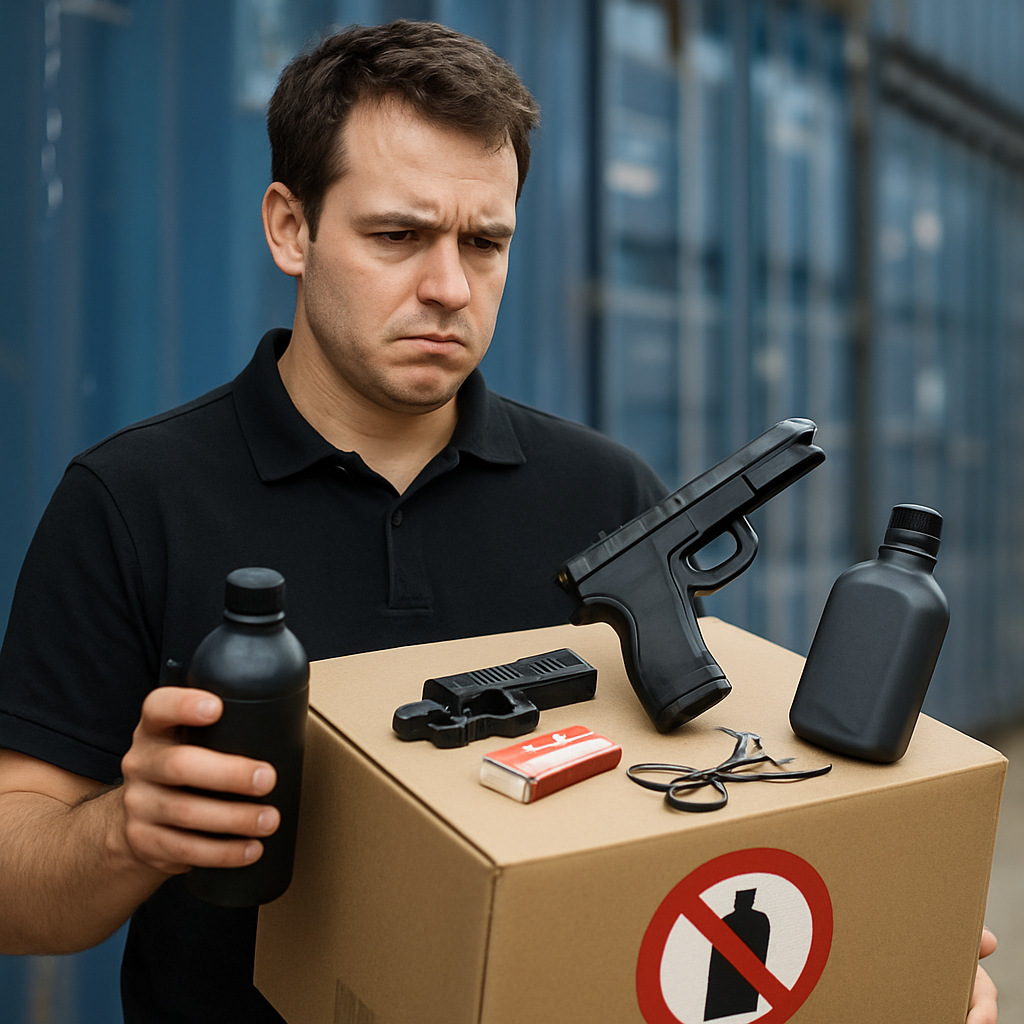
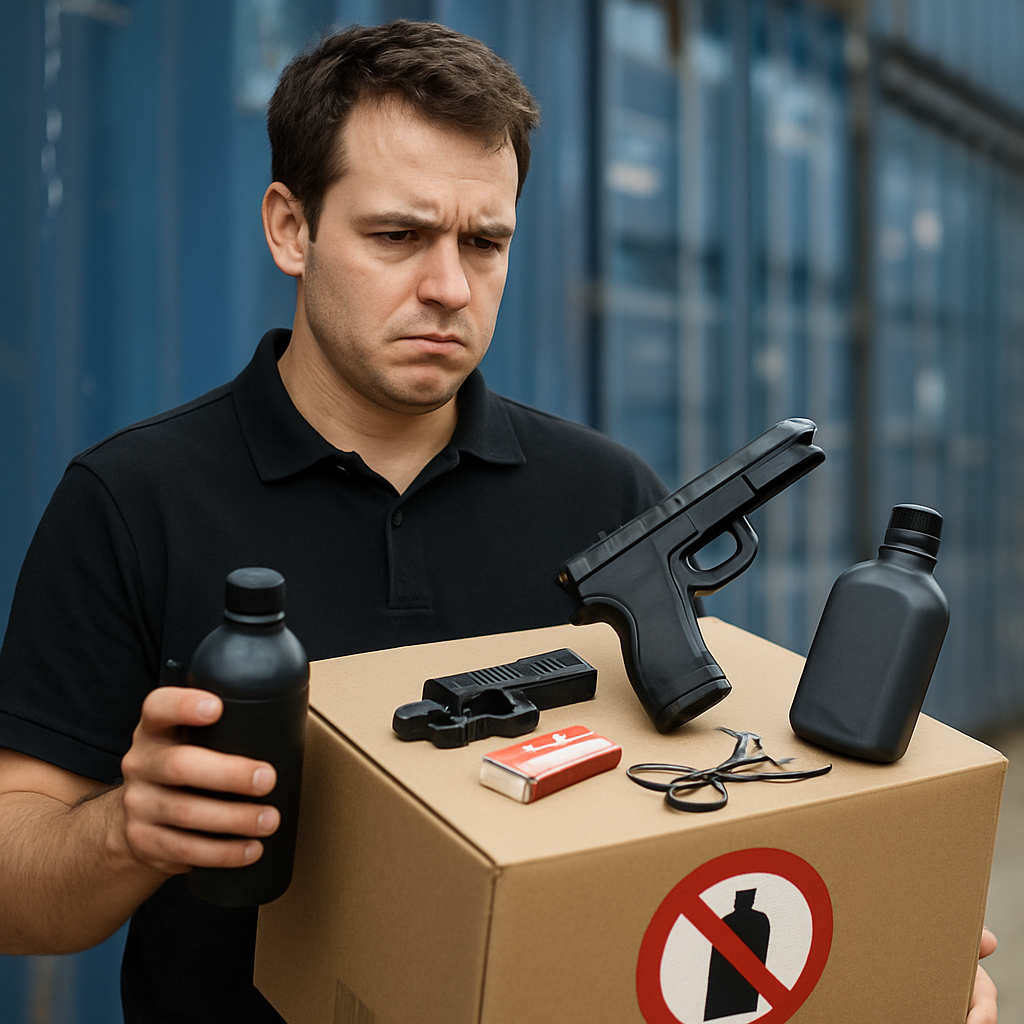
Start with the items that are commonly banned by carriers or customs authorities. Common examples include aerosols, airbags, alcoholic beverages, ammunition, firearms and weapon replicas, explosives, gasoline, marijuana, dry ice, cigarettes and electronic cigarettes, and other hazardous materials. These items are commonly restricted because they can create fire, explosion, leakage, health, or security risks, or because export/import rules block them.
USPS states that internationally prohibited items may not be sent from the United States to any country, and it also makes clear that if an item is not allowed to ship in the US, it is not allowed to ship abroad. That is why the first check should always be the origin-country rule, not just the destination-country rule. You can review the USPS guidance on international shipping restrictions for the underlying principle and the distinction between prohibited and restricted items.
For a broad carrier-facing overview, Shipito’s explainer on what you can’t ship internationally usefully separates the problem into banned carrier items, destination-country restrictions, and method-specific limits.
Why some items are banned outright
Items are usually prohibited when the risk is too high for transport or customs processing. For example, flammable liquids, pressurized containers, explosive materials, or illegal goods can endanger aircraft, couriers, warehouse staff, customs officers, and recipients. In some cases, the item is not only unsafe but also illegal to export or import.
That is why a generic “can I ship it?” question often has the wrong shape. The better question is: Is it banned outright, restricted by the destination country, or restricted by the shipping method?
Common items that are banned or heavily restricted
The following categories show up repeatedly in carrier and customs guidance. This is not a universal ban list for every country, but it is a strong starting point for the items most often rejected or delayed.
| Item category | Typical issue | What that means in practice |
|---|---|---|
| Aerosols | Pressurized and potentially hazardous | Often prohibited or tightly restricted |
| Airbags | Contains hazardous components | Usually not accepted internationally |
| Alcoholic beverages | Alcohol regulations and license requirements | May be blocked or require special permissions |
| Ammunition | Weapon-related hazard | Commonly prohibited |
| Firearms and replicas | Security and legal restrictions | Often banned or highly controlled |
| Explosives | Severe safety risk | Prohibited in most settings |
| Gasoline and fuel | Highly flammable | Usually prohibited |
| Marijuana or other illegal drugs | Controlled substance laws | Prohibited and potentially criminal |
| Dry ice | Hazardous material / transport limits | Often restricted by method and quantity |
| Cigarettes / e-cigarettes | Tobacco and nicotine restrictions | Severely limited or prohibited in many cases |
| Other hazardous materials | Safety and carrier rules | May be restricted or rejected |
Carrier help pages and shipping platforms commonly group these items together because the underlying issue is transport safety. For example, Pirate Ship’s USPS prohibited-items guidance lists international restrictions that include aerosols, airbags, alcoholic beverages, ammunition, cigarettes, and similar categories. Easyship’s shipping-restrictions overview also highlights that tobacco is often severely restricted and that alcohol can be allowed only on a case-by-case basis by some express couriers.
If your item falls into one of these categories, do not assume that a label or a stronger box will make it shippable. The barrier is usually the law or the carrier policy itself, not the packaging.
Electronics are not automatically banned
Electronics are a common concern, but they are not categorically prohibited. Ordinary electronics can often be shipped internationally, including many consumer devices and accessories. The issue is usually the battery, not the device body.
Loose lithium batteries are a classic problem because they can pose a fire risk if damaged or improperly packed. Some battery-powered electronics may be allowed only when the batteries are installed, protected from activation, or shipped under a particular service’s dangerous-goods rules. Shipito’s guidance and Ship24’s restricted-items overview both point to lithium batteries, especially when loose, as a frequent method-restricted or prohibited item.
So if you are asking whether you can ship electronics via USPS internationally, the real answer is: sometimes yes, but you must check whether the specific device contains batteries, whether the batteries are installed or loose, and whether the chosen service accepts that configuration.
Can you ship liquids, perfume, or aerosols internationally?
Liquids are not automatically banned, but many are restricted because they can leak, break, ignite, or trigger carrier safety rules. The answer depends on the product, the quantity, the container, the packaging, and the method of transport.
Perfume and cologne are a good example. They are often treated as flammable liquids because of the alcohol content, which means they may be restricted or not accepted by some services. Movers.com specifically notes perfume or cologne as a common example of a product that may not be allowed because it is flammable. If you are wondering whether you can send perfume in the mail, the practical answer is that you must check the carrier’s rules first rather than assume it is acceptable.
Aerosols are another common problem because they are pressurized. A can of deodorant, hair spray, spray paint, or similar product can be rejected because pressure and flammability create transport risk. That is why aerosols often appear on prohibited-items lists alongside other hazardous goods.
Shipito’s international-shipping guidance and the USPS/Pirate Ship prohibited-items pages both support the same practical lesson: do not ship a liquid, perfume, or aerosol internationally until you have checked the product label and the carrier rules. If the product is described as flammable, compressed, corrosive, toxic, or otherwise hazardous, treat it as a warning sign rather than an afterthought.
If you are looking for a simple rule, it is this: liquids may be allowed, but flammable, pressurized, or leak-prone liquids are often restricted. That is the difference between a package that can move and a package that may be rejected at the counter, blocked in transit, or returned after inspection.
Why the destination country matters
Even if the origin country and the carrier allow an item, the destination country may still prohibit it or require extra documents. USPS says each country has its own rules on what it will and will not allow, which is why you must check the destination country listing before mailing anything internationally.
This is especially important for people asking whether items from the UK can be shipped to the US. In principle, the answer is not a simple yes or no. A shipment is only possible if the exporting country allows it, the carrier accepts it, and the US import rules allow it. If any one of those blocks the item, the parcel may be delayed, returned, seized, or refused entry.
USPS also notes that shipments to APO/FPO/DPO addresses in foreign countries are treated like domestic mail for postal purposes, but they are still subject to the destination country’s laws. In other words, military-mail routing does not bypass the destination country’s restrictions.
If you are shipping to a specific country, check the country listing first, then verify the item category, and only then buy the label. That order matters because a parcel that looks normal in the origin country may be inadmissible at the border.
Restricted items: allowed only under certain conditions
Not every difficult item is banned outright. Some are restricted, which means they can move internationally only if the route, documentation, packaging, or quantity meet the rules.
Ship24’s restricted-items guidance is helpful here because it includes examples such as pharmaceuticals, medical equipment, weapons or weapon parts, high-value electronics, encrypted devices, and food or agricultural products subject to inspection. Global shipping guidance also commonly points to medicines, alcohol, tobacco, and food as items that may be shipped only under special conditions.
Here is the practical difference:
- Prohibited means no legitimate shipping method should accept it.
- Restricted means it might ship if you satisfy the conditions.
- Method-restricted means one carrier or service says yes, while another says no.
That is why choosing a different service can sometimes solve the problem for a restricted item. But if the item is prohibited, a different courier does not change the result.
If you are using a platform such as Pirate Ship, treat it as a shipping interface that points you towards the underlying carrier rules rather than as a separate rulebook. The important step is still the same: identify the item, then check the applicable carrier and destination-country rules before shipping.
What to check before shipping internationally
Before you buy a label or forward an order, use a simple checklist. This will save you from delays, returns, confiscation, or penalties.
- Identify the exact item. Do not rely on a product category alone. The ingredients, battery type, liquid content, and packaging all matter.
- Check the carrier’s prohibited-items list. Start with the shipping service you plan to use, because carrier rules can be stricter than you expect.
- Check the destination-country listing. The importing country may have its own bans or documentation rules.
- Decide whether the item is prohibited, restricted, or method-restricted. This tells you whether the shipment is impossible, conditional, or service-dependent.
- Prepare the correct documents. Customs may require declarations, permits, certificates, or special descriptions.
If you are buying something on Amazon and want to ship it internationally, do not assume the marketplace listing guarantees exportability. The seller, the carrier, and the import rules all have to line up. A product can be perfectly normal for domestic sale and still be blocked from export or import once it crosses a border.
For customs paperwork basics, it can also help to read about what happens if customs paperwork is missing, especially if you are worried about a package being held, returned, or delayed. If you need a deeper look at documentation requirements, see customs POA requirements and the explanation of the CBP customs release form.
What happens if you ship something prohibited or declare it wrongly?
If a parcel contains a prohibited item, or if it is misdeclared, the consequences can include delay, return to sender, confiscation, additional handling, or refusal of entry. In some cases, the sender may also face civil penalties or criminal penalties. USPS says that knowingly mailing dangerous or injurious materials can lead to civil penalties, cleanup costs, damages, and possible criminal penalties.
That is why accurate labeling and declarations matter. Customs and carriers rely on the description you provide, but they also inspect and screen parcels. If the package does not match the declaration, the shipment can be treated as a compliance problem rather than a simple delivery issue.
When a shipment is allowed but still triggers duties or customs processing, the issue is different from prohibition. In that case, you may need to understand how to pay import customs duty rather than worrying about outright banning. Duty, customs release, and prohibition are separate questions, and it helps to keep them distinct.
A simple rule you can use every time
If you only remember one thing, make it this: check the item, check the carrier, and check the destination country. Do not assume that an item can be shipped internationally just because it can be bought online or mailed domestically. The answer depends on whether it is prohibited, restricted, or only restricted on certain services, and on whether the route you are using accepts it.
That approach works for common edge cases too. It explains why electronics may be allowed but batteries cause problems, why perfume may be shippable in one case and rejected in another, and why a package can be fine for one country but blocked by another. If you treat international shipping as a three-part compliance check rather than a one-line yes/no question, you will avoid the most common mistakes.